
City of London · Central London
Skimmingin Blackfriars.
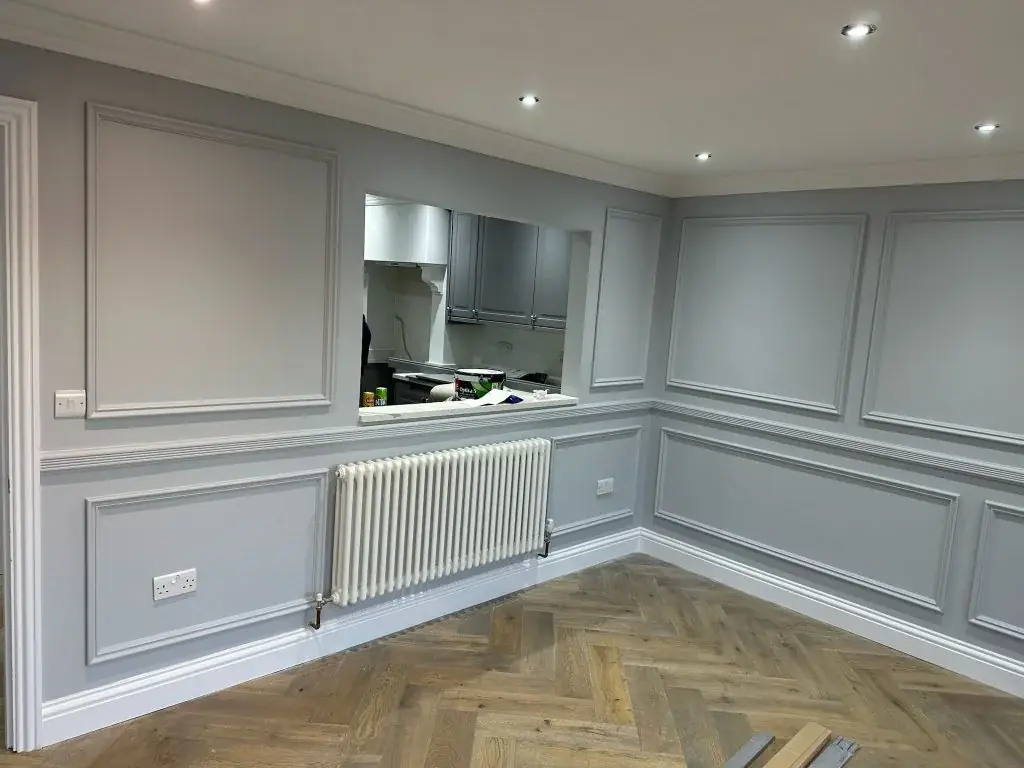
A skim coat can give a room a cleaner look without replacing every lining. But it only works well when the underlying surface is suitable. DWM Construction can discuss skimming as a finishing step once the condition of the wall or ceiling has been properly checked.

- Service
- Skimming
- Neighbourhood
- Blackfriars
- Borough
- City of London
- Next step
- Discuss your project
Your project brief
Choose skimming when the base is already sound
Skimming is best suited to surfaces that are stable and only need refinement, not reconstruction. If the wall is firm but marked, lightly uneven or affected by minor defects, a skim can be an efficient way to refresh the room. If the background is weak, however, the right answer may be repair or new board before any finish coat is applied.
This distinction matters because skimming is thin. It follows the shape and integrity of what lies underneath. A good brief should therefore record whether the room is being re-skinned after other works, whether existing plaster is suitable, or whether new plasterboard has already created the base for finishing.
Local address checks before skimming is scheduled
Blackfriars sits within the City of London, where conservation-area guidance may apply to some external changes and associated refurbishment decisions. The council’s published conservation-area information is the correct starting point, but the exact address must be checked before relying on any designation. For skimming inside the home, the practical question is usually what works have happened before it and whether the background is truly ready for a thin finish.
Design decisions
Keep the sequence with decorating in mind
A skim is not the same thing as decoration, even though people often plan them together. The finish needs time, preparation and protection before paint or wallpaper is applied. If the room also needs new joinery, electrical changes or built-in units, those decisions should be settled first so the skimming line falls where it should.
Corners, window reveals and ceiling edges also need clear agreement. These are the parts where a neat finish can be lost if the scope is vague. By dealing with the junctions early, the room is easier to decorate well afterwards.
Design checks
Four things we confirm before drawing a skim finish.
- 01Finishing suitable plasterboard surfaces after new partitions or ceiling work.
- 02Re-skimming sound existing plaster where a smoother finish is wanted.
- 03Making good minor surface defects, with more substantial repairs identified separately.
- 04Preparing edges and junctions around windows, doors and adjoining finishes.



Questions
Before you call about Blackfriars.
How can I tell if a wall is suitable for skimming?
It should be sound, dry and stable enough to carry a thin finish. If it is loose, crumbling or heavily patched, a different approach may be needed before skimming can work properly.
Do skimming and painting need to be planned together?
They should be coordinated, but they are different stages. Skimming creates the base; painting completes the room once the surface has cured and any preparation is finished.
Why mention plasterboard in a skimming brief?
Because new board often provides the best background for a clean finish. The brief should say whether the work is going straight onto existing plaster or onto a newly lined surface.
Planning and project guidance
- Conservation areas - City of London
- GOV.UK · Planning permission
- GOV.UK · Building regulations approval
- GOV.UK · Party walls and building work
Check the current guidance for your address before relying on a planning route. This guide is not a planning decision or a verified local case study.
Other services in Blackfriars








