
Croydon · South London
House renovationin Croydon.
A good renovation brief starts with what the house needs to function better, not with colours or new furniture. In Croydon, phased planning helps you order the work sensibly, so the building, services and finishes support each other instead of creating avoidable rework.
- Service
- House renovation
- Neighbourhood
- Croydon
- Borough
- Croydon
- Next step
- Discuss your project
Your project brief
Start with the building, then decide what can wait
If walls move, floors level out or openings change, those decisions shape everything else. A renovation should first establish what is being retained, what is being altered and which defects need investigation before anyone prices the decorative finish. That keeps the scope realistic and avoids designing a room around a problem that has not been checked.
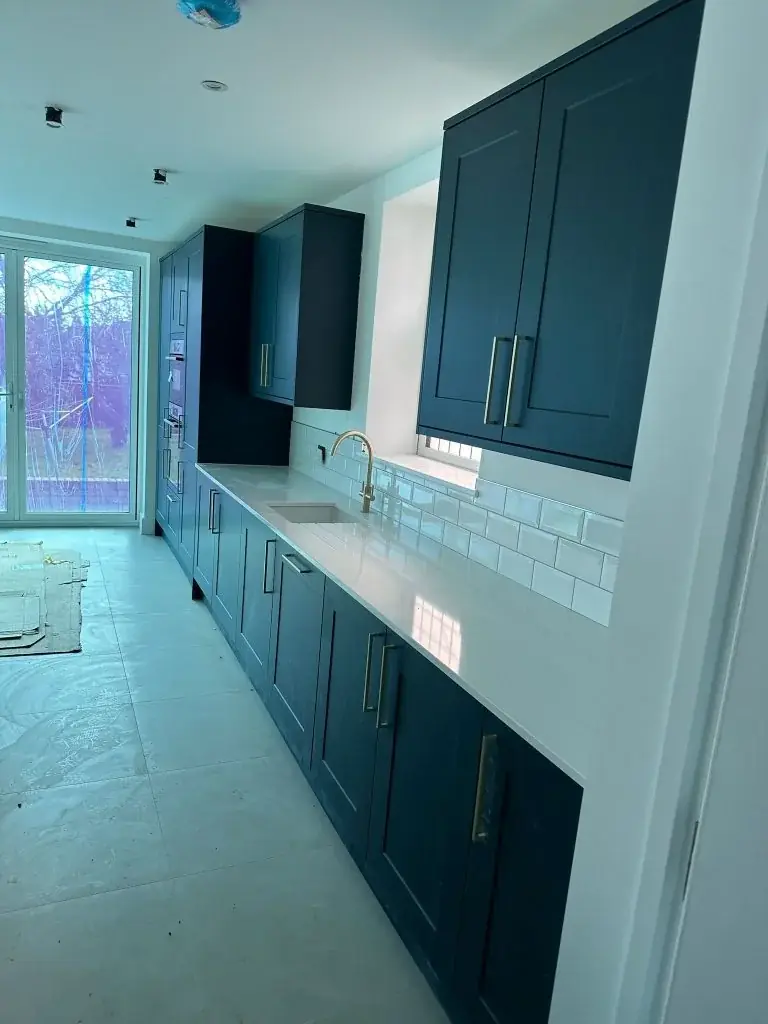
It is usually sensible to separate structural work, service upgrades and visible finishes into clear phases. For example, if a kitchen wall is coming out, the scope should show the structural question, the electrical and plumbing changes, and the final layout as distinct items rather than one vague bundle.
Croydon local checks before you commit to the scope
Croydon Council says conservation areas have special architectural or historic character, and that the need for planning permission can increase where work affects one of those areas or its setting. The Council also notes that some areas have additional Article 4 Directions, and that each property’s position should be checked rather than assumed. Use the council directory and, if relevant, the detailed area guidance, because exact address matters.
Design decisions
Do not let one trade define the whole scheme
Renovation work often fails when a single choice is fixed too early. A new floor finish, for instance, can be made harder by unresolved dampness, uneven substrates or a heating change. The same applies to windows, doors and ceilings: each should be coordinated with access, making good and the order of work.
The practical aim is to protect the programme and the budget from hidden assumptions. Clear exclusions are helpful too, especially where a survey may later show that some walls, services or finishes need more work than first expected.
Design checks
Four things we confirm before drawing a house renovation.
- 01Record existing defects and previous alterations before design work starts.
- 02Separate structural changes, service upgrades and decorative work.
- 03Discuss occupancy, safe access and essential services during work.
- 04Agree investigation, approvals, exclusions and handover records in the written scope.


Questions
Before you call about Croydon.
How should a renovation brief be phased so the costly decisions come first?
Start with survey findings, structural needs and service routes. Once those are fixed, move to room layouts, then finishes. That sequence reduces redesign and helps each trade work from the same agreed information.
Why should finishes not be chosen before the building work is understood?
Because surfaces often depend on what is happening behind them. A finish can be unsuitable if the substrate moves, needs extra boarding or must carry new services. The order matters more than the colour chart.
What should be written into the scope before work begins?
Set out what is included, what is excluded, which investigations are still needed and how any approvals or consents will be handled. That makes the job easier to manage if the building reveals something unexpected.
Planning and project guidance
- Conservation areas | Croydon Council
- GOV.UK · Planning permission
- GOV.UK · Building regulations approval
- GOV.UK · Party walls and building work
Check the current guidance for your address before relying on a planning route. This guide is not a planning decision or a verified local case study.
Other services in Croydon








