
Redbridge · East London
Decoratingin Ilford.
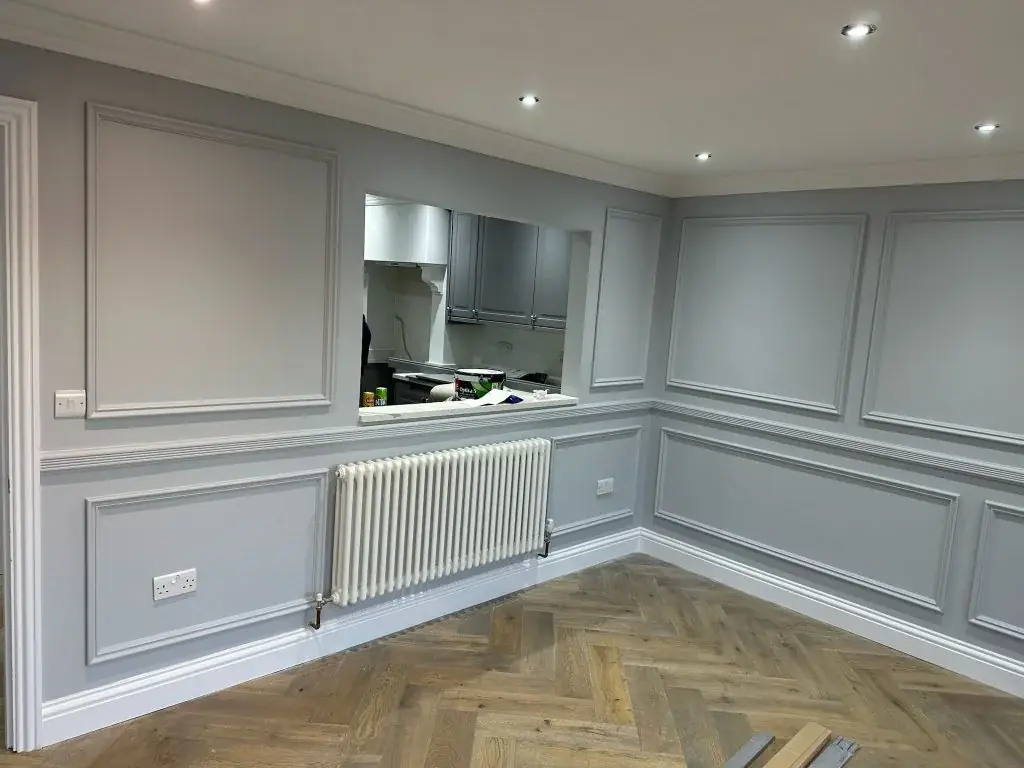
Decorating is where a room’s practical decisions become visible. DWM Construction can help with finishes, wallcoverings and detail work once the underlying building tasks are settled, so the result feels planned rather than pieced together at the end of the project.

- Service
- Decorating
- Neighbourhood
- Ilford
- Borough
- Redbridge
- Next step
- Discuss your project
Your project brief
Let the room’s use shape the finishes
The right decorating choice depends on how the room is used. A family room may need durable finishes and careful trim detailing, while a quieter room may suit a different balance of colour and wallcovering. The question is not just what looks good, but what survives the daily pattern of use.
Feature walls should support the room rather than compete with it. A restrained approach can work better when there are already strong elements such as new joinery, a bold floor or a clear view from the hallway. The finish should pull the space together, not add noise.
Redbridge address checks for external decorative changes
Redbridge’s planning pages show that some properties are subject to special heritage controls, including Article 4 directions in selected places and listed-building restrictions where relevant. That matters if decorating extends outside, but an internal refresh is not the same as an external alteration. The exact property should be checked rather than assuming borough-wide rules apply to every house in Ilford.
Design decisions
Build the sequence into the specification
Wallpaper alignment, edge detailing and trim junctions all depend on the order of work. Decoration should follow the disruptive trades, but the scope should also say which preparation is included, how many coats are expected and whether any making-good belongs to a previous stage.
If a possible brief includes a room refresh after refurbishment, it is worth deciding early where the finish changes. For instance, one room may need paint only, while another needs wallcovering and painted woodwork. Keeping those decisions separate makes the result more consistent.
Design checks
Four things we confirm before drawing decorating work.
- 01Decide how the room will be used before choosing the finish.
- 02Separate wallpaper, paint and trim work in the specification.
- 03Agree the sequence after building work and before final decoration.
- 04Check whether external decorative changes need heritage review at the exact address.




What makes decorating different from simple painting?
Decorating usually brings several finishes together: paint, wallcoverings, trim and detail work. The challenge is choosing a sequence and style that suits the room as a whole.
Should feature walls be planned in isolation?
No. They work best when they respond to the room’s layout, light and furniture plan. Otherwise they can feel disconnected from the rest of the space.
Why does the order of finishing matter so much?
Because late dust, joinery changes or touch-ups can spoil completed surfaces. A clear sequence helps the decorating stage finish the project cleanly rather than being interrupted by other trades.
Planning and project guidance
- Protected buildings and conservation areas
- GOV.UK · Planning permission
- GOV.UK · Building regulations approval
- GOV.UK · Party walls and building work
Check the current guidance for your address before relying on a planning route. This guide is not a planning decision or a verified local case study.
Other services in Ilford








