
Kingston upon Thames · South London
Roofingin Kingston.
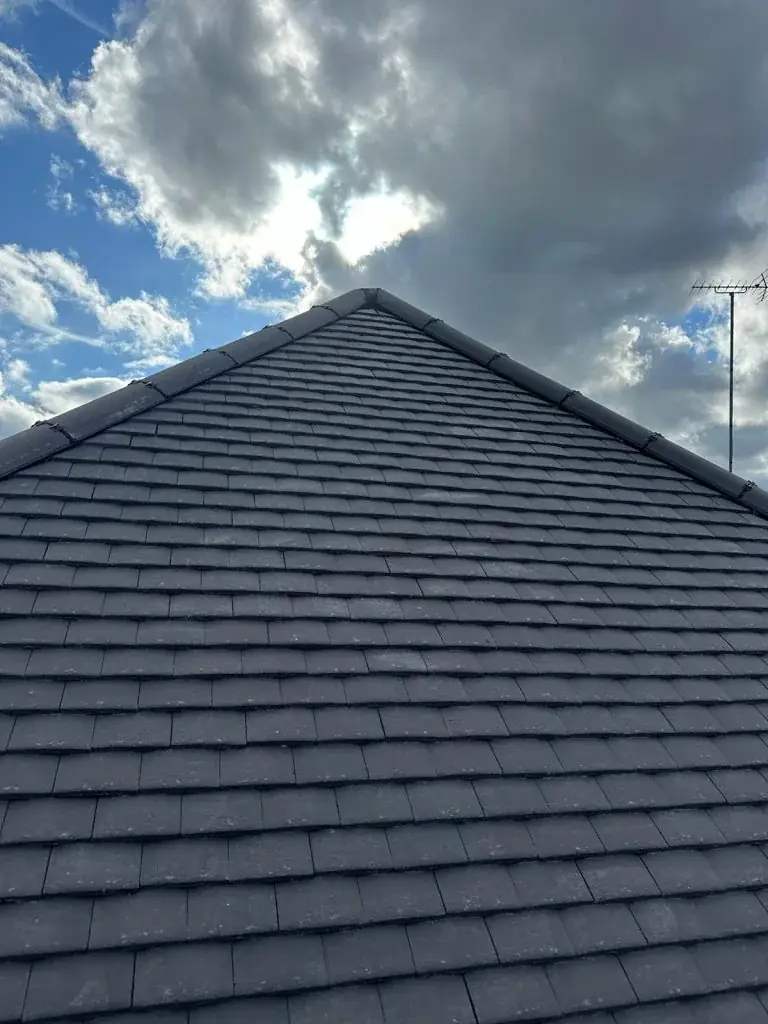
A roof issue is not always solved by changing the obvious tile or patching the visible damp mark. The better approach is to understand how the covering, the junctions and the drainage work together before deciding on repair or replacement.
- Service
- Roofing
- Neighbourhood
- Kingston
- Borough
- Kingston upon Thames
- Next step
- Discuss your project
Your project brief
Trace the fault through the roof system, not just the visible patch
Water can travel before it appears inside, so the starting point should be the accessible defect and the surrounding details. A loose covering, poor flashing or failed abutment can all be part of the same problem, even if the symptom shows up elsewhere.
That means the scope should focus on cause as well as location. If only the visible area is treated, the underlying defect may remain and the same problem can return after the next period of heavy weather.
Kingston checks before roofing works are fixed in the programme
Kingston’s planning guidance directs homeowners to policy, heritage and conservation checks where relevant, and to consider whether trees or Article 4 controls affect the site. Roofing can be internal to the building envelope, but if the property is listed or in a sensitive area, the exact address must still be checked. Borough information is a guide, not proof of permission or exemption.
Design decisions
Separate a repair from a wider roof or loft brief
Roofing repair, roof replacement and loft conversion are different scopes. They involve different decisions about structure, access and completion, so the work should not be designed as if every roof job follows the same pattern.
If the roof project sits alongside other improvements, the sequencing matters. Alterations to the roof covering, ridges or rainwater details may need to be coordinated with structural requirements so the finished building envelope works as intended.
Design checks
Four things we confirm before drawing roofing work.
- 01Investigate the accessible defect and the surrounding roof details before agreeing the scope.
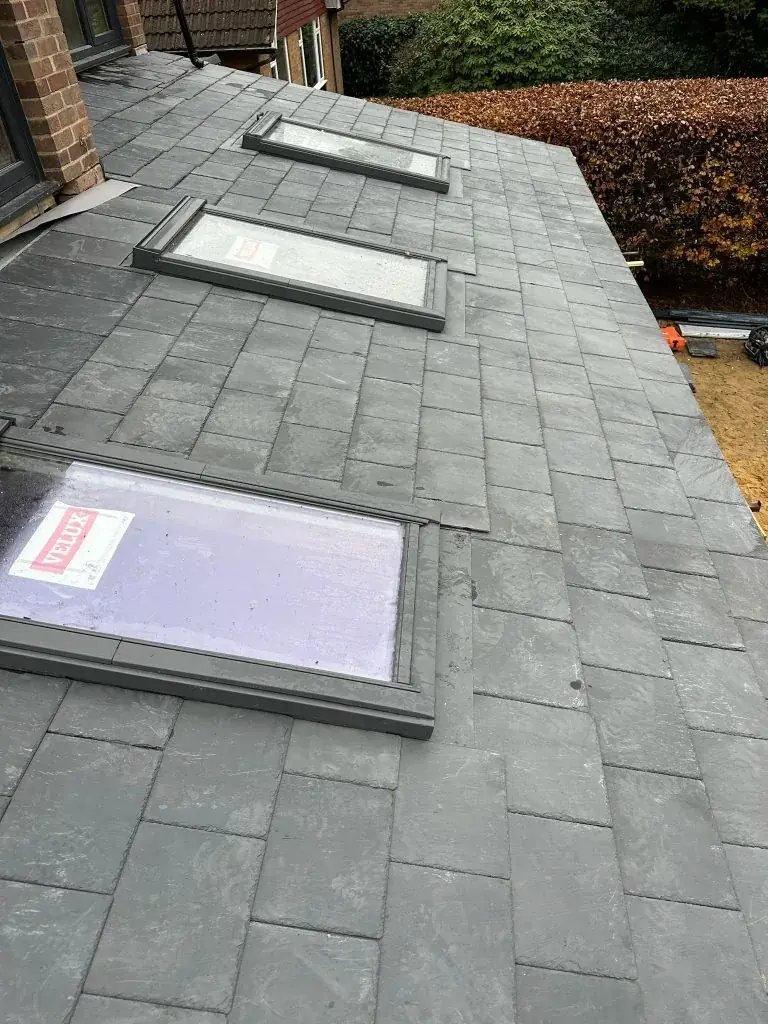
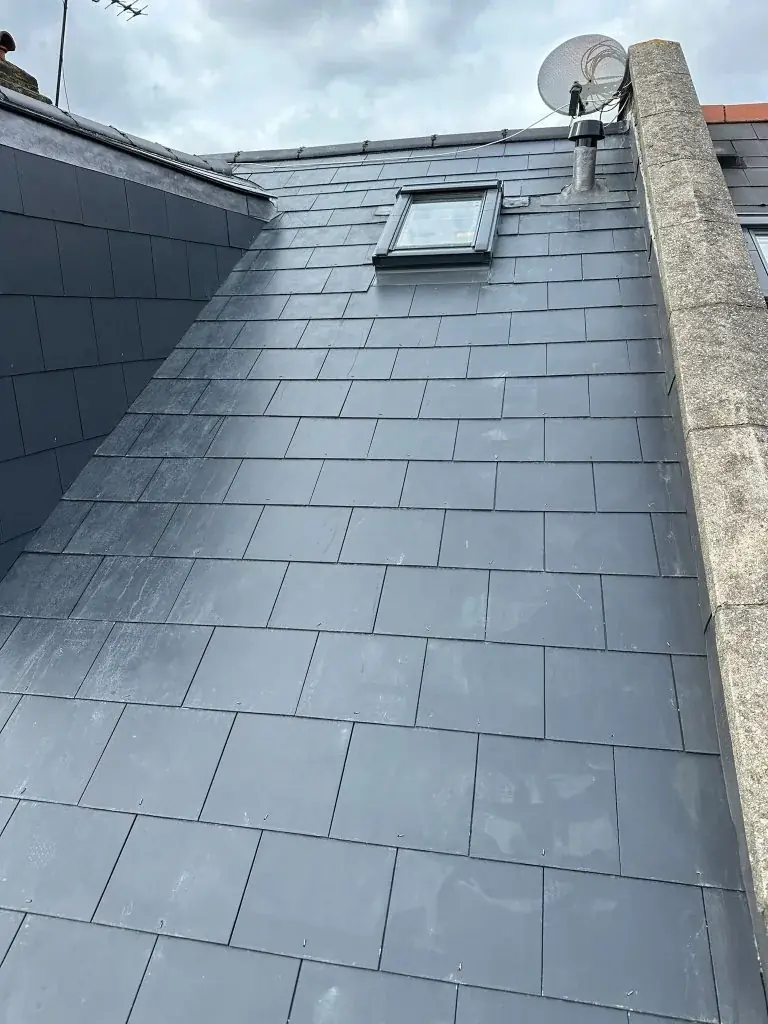
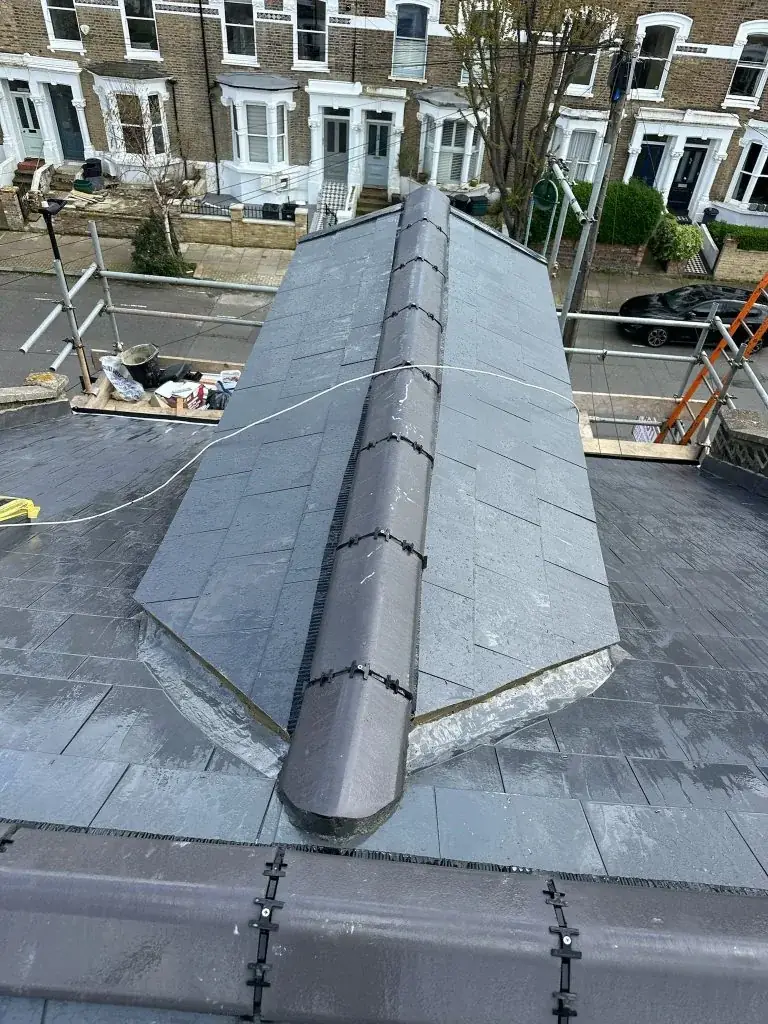
- 02Check flashings, abutments and rainwater junctions as well as the covering itself.
- 03Decide whether the job is a repair, replacement or part of a larger conversion brief.
- 04Coordinate roof work with any structural or access requirements in the wider project.
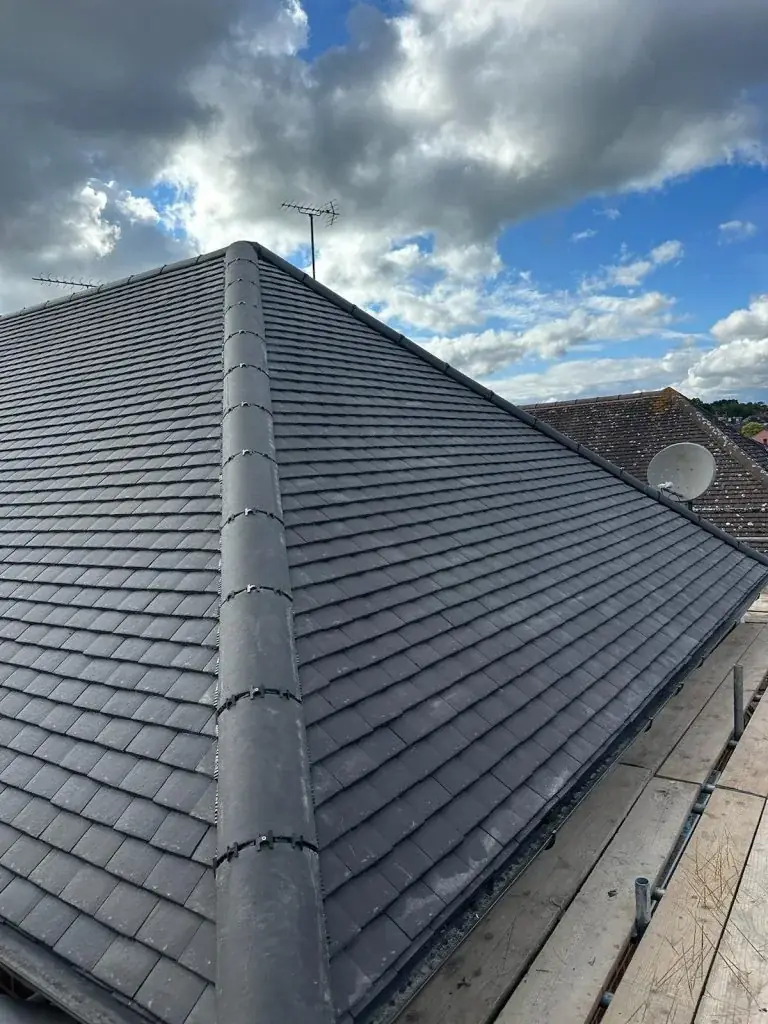
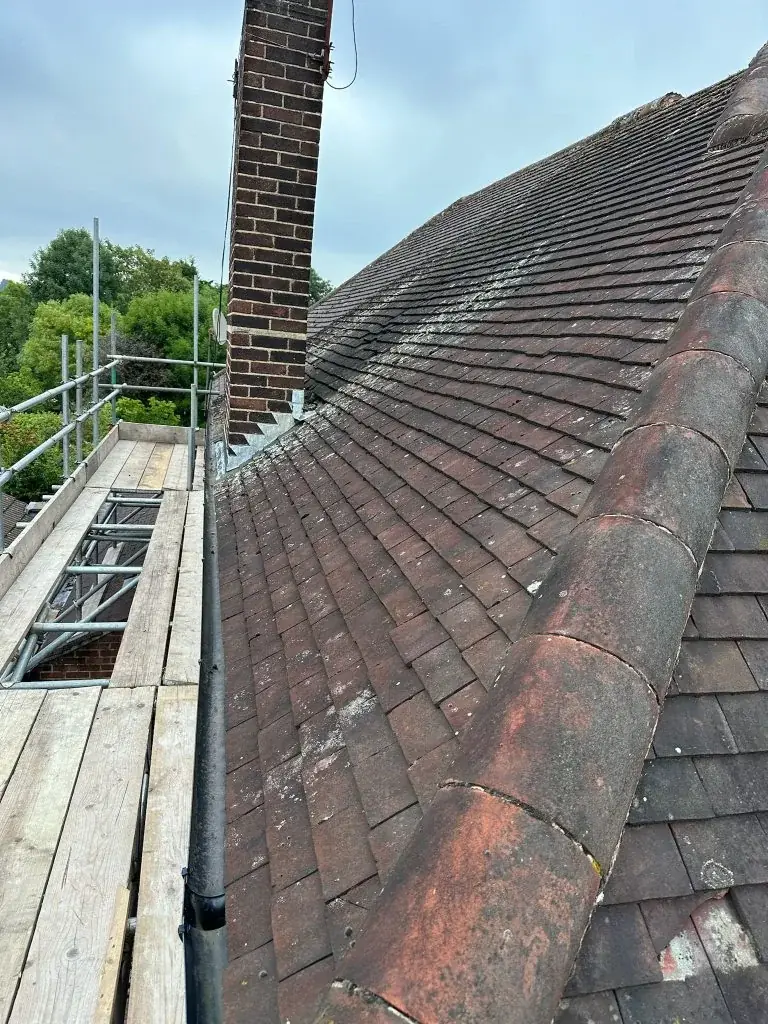
Why is a roof leak not always fixed by working on the obvious spot?
Because water can travel along the roof build-up before appearing indoors. The source may be a flashing, abutment or junction rather than the patch where the stain is visible.
How does roofing differ from a loft conversion brief?
Roofing is about the covering and related weatherproofing; a loft conversion adds structural and internal design decisions. They overlap, but they are not the same scope and should be planned separately.
What should be checked alongside the tiles or covering?
The flashings, abutments, ridges and rainwater junctions. Those details often govern whether the roof keeps water out reliably, especially after weathering or previous repairs.
Planning and project guidance
- Planning policy and guidance | Royal Borough of Kingston upon Thames
- GOV.UK · Planning permission
- GOV.UK · Building regulations approval
- GOV.UK · Party walls and building work
Check the current guidance for your address before relying on a planning route. This guide is not a planning decision or a verified local case study.
Other services in Kingston








