
Southwark · South London
Skimmingin Peckham.
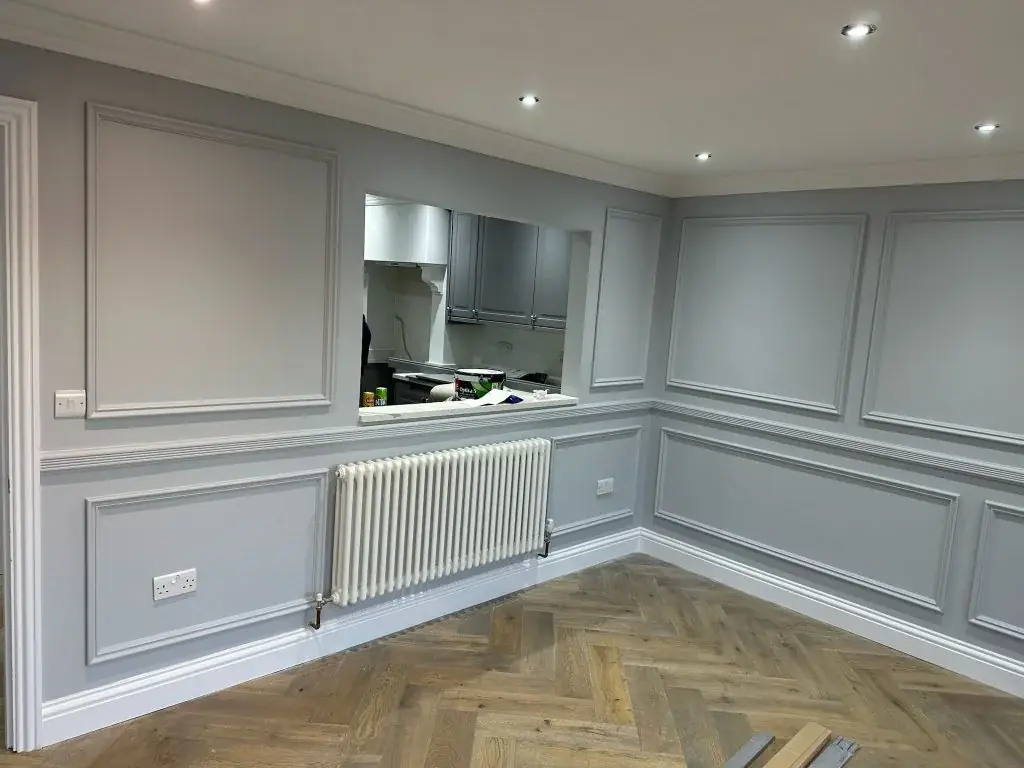
Skimming can refresh a room quickly, but only if the background is suitable. The main decision is whether the existing plaster is sound enough for a thin finish or whether the surface needs more preparation first, especially around ceilings, repairs and new partitions.

- Service
- Skimming
- Neighbourhood
- Peckham
- Borough
- Southwark
- Next step
- Discuss your project
Your project brief
Decide whether the existing surface is ready
Skimming works best when the wall or ceiling is stable, reasonably flat and free from serious movement. If the background is sound but tired, a skim can bring it back into one even finish. If there are loose areas, cracks with movement or badly uneven patches, the safer option may be preparatory repair first.
That decision affects the whole room brief. A light refresh may need only small making-good and a skim coat, while a larger refurbishment may need board replacement, joint treatment or a different sequence altogether. Choosing the right route avoids paying for a finish that fails because the base was never right.
Southwark address checks before skimming as part of wider works
Southwark notes that conservation areas are protected through the planning process and that Article 4 directions can affect some alterations. Skimming alone is usually an internal finishing task, but if it sits within a larger project, the exact Peckham address should still be checked against the relevant planning status and any separate leasehold or listed-building requirements.
Design decisions
Keep the decoration stage separate from the skim
Skimming is part of the surface build-up, not the decoration itself. The room should be planned so the skim can cure properly before paint, wallpaper or other finishes are applied. If those stages are blurred together, moisture, marks or texture problems can show through later.
It is also worth agreeing how junctions will be treated around windows, doors and adjoining materials. A skim that looks smooth in the centre may still need careful finishing at edges, especially where old and new surfaces meet. That detail is often what makes a room look newly refurbished rather than simply patched.
Design checks
Four things we confirm before drawing a skim finish.
- 01Check whether the background is stable enough for a thin finish.
- 02Identify any areas that need repair before skimming starts.
- 03Allow for curing time before decorating.
- 04Agree how edges and junctions will be finished.



Can skimming hide every defect in a room?
No. It improves the finish but does not solve movement, loose backgrounds or major unevenness. Those issues should be repaired first, otherwise the skim may fail or show the same problems again.
Is skimming the same as decorating?
No. Skimming creates the finished plaster surface, while decorating comes after it. Keeping those stages separate helps the surface cure properly and gives a cleaner final result.
Do new plasterboard walls always need skimming?
Not always, but they often need some form of finishing. The decision depends on the board type, the desired appearance and whether the rest of the room is being refurbished at the same time.
Planning and project guidance
- Conservation areas | Southwark Council
- GOV.UK · Planning permission
- GOV.UK · Building regulations approval
- GOV.UK · Party walls and building work
Check the current guidance for your address before relying on a planning route. This guide is not a planning decision or a verified local case study.
Other services in Peckham








