
Harrow · West London
Doorsin Stanmore.
A door is only successful if it suits the opening, the room and the adjoining finishes. The practical decisions are whether the existing frame can stay, how much clearance is needed and what kind of hardware the door should carry for everyday use.
- Service
- Doors
- Neighbourhood
- Stanmore
- Borough
- Harrow
- Next step
- Discuss your project
Your project brief
Decide whether the existing frame stays
Retaining a sound frame can reduce disruption, but only if it is still square, serviceable and suited to the new leaf. If the opening is out of true or the frame is tired, fitting a new door into it may create poor gaps, rubbing edges and a finish that never feels right.
The door should also be judged by its use. An internal room door, a utility door and an external door have different demands, so the choice of thickness, locks, handles and hinges should follow the purpose rather than a generic style preference.
Local checks for door work in Stanmore
Harrow’s borough pages include Stanmore in the conservation-area search information, so exact-address checks are important where doors affect the exterior appearance or a character-sensitive opening. Internal doors usually come down to fit and finish, but listed buildings, ownership and lease consent can change the position. The area name is a prompt to check, not a substitute for it.
Design decisions
Check how the door meets the surrounding finish
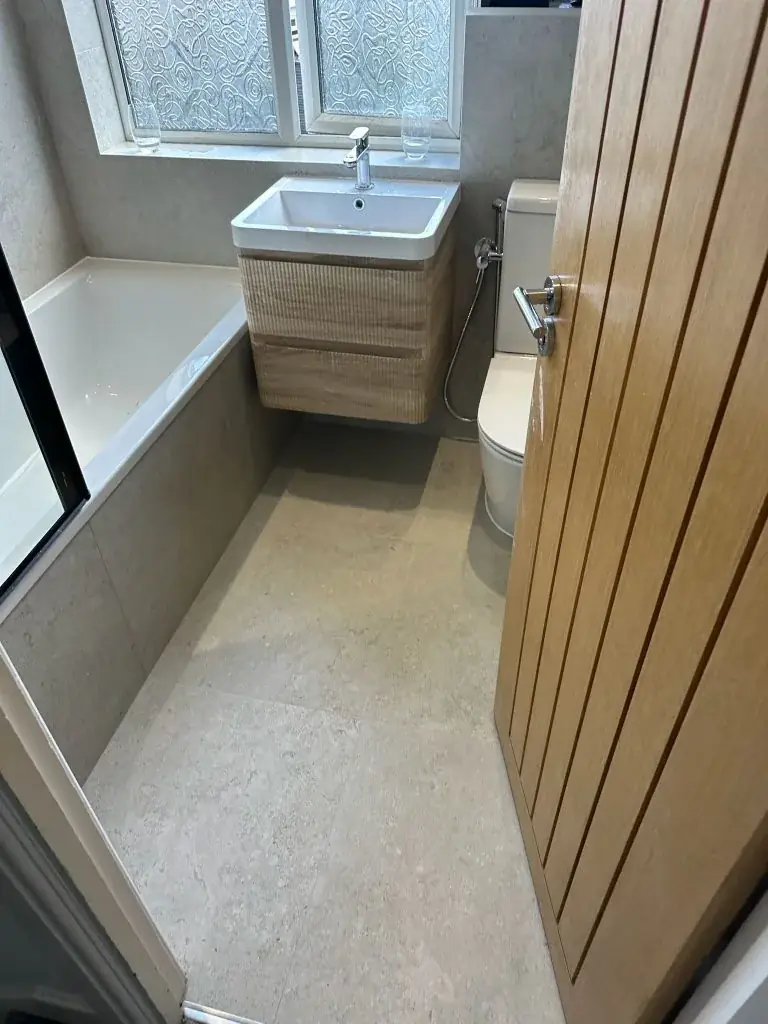
Clearances matter because doors interact with flooring, architraves and adjacent walls. A good fit should open and close cleanly without scraping, catching or leaving a visual mismatch at the edges. That is often the difference between a tidy result and a rushed one.
If the opening is being altered, the surrounding making-good should be part of the scope. Frames, linings and architraves are not just decorative extras; they are what make the door sit properly in the room and read as finished work.
Design checks
Four things we confirm before drawing door installation.
- 01Confirm whether the existing frame can be retained before ordering the door.
- 02Allow for clearances with flooring, architraves and adjoining finishes.
- 03Choose hardware that suits the door’s intended use.
- 04Include making-good around the opening if the frame or lining changes.

Why does a door need checking against the frame rather than just the opening size?
Because an opening can be the right size on paper but still be out of square or unsuitable for the door you want. The frame condition determines whether the finished result will work smoothly.
Should hardware be chosen after the door is fitted?
It is better to decide early, because hinges, handles and latches affect how the door is made up and used. Early choice avoids awkward substitutions later.
Can an internal door replacement be treated as a simple swap?
Only if the frame, clearances and surrounding finish are all sound. Once the opening needs adjustment or making good, the job becomes more than a simple swap.
Planning and project guidance
- Conservation areas and Article 4 – London Borough of Harrow
- GOV.UK · Planning permission
- GOV.UK · Building regulations approval
- GOV.UK · Party walls and building work
Check the current guidance for your address before relying on a planning route. This guide is not a planning decision or a verified local case study.
Other services in Stanmore








