
Kingston upon Thames · South London
Doorsin Surbiton.
Door work looks simple until the opening, the frame and the surrounding finishes are all checked properly. The right decision is whether the existing opening can support the new door cleanly, or whether the whole arrangement needs adjustment first.
- Service
- Doors
- Neighbourhood
- Surbiton
- Borough
- Kingston upon Thames
- Next step
- Discuss your project
Your project brief
Check the opening before ordering the door
A door should be chosen for its purpose, the space it has to move in and the condition of the frame or lining. If the door opens onto stairs or a narrow circulation route, clearances become especially important because even a small mismatch can make the space awkward to use.
The brief should state whether the existing frame is being kept, altered or replaced. That matters because architraves, linings and making-good are part of the job, not an afterthought. If the opening has to change, the surrounding finishes and any security or fire-performance needs should be considered at the same time.
Local checks for doors in Surbiton
For a Surbiton property, Kingston upon Thames Council’s planning policy framework may apply if the door work is part of an external alteration or a heritage-sensitive project, but the exact address still has to be checked. The council’s homeowner guidance points to conservation and listed-building controls where relevant, and some areas may also be affected by Article 4 directions. A door replacement alone is usually a building decision, while wider external changes may need separate consent.
Design decisions
Treat hardware and finishing as part of the specification
Handles, hinges and latches should match how the door will be used, not just how it looks. An internal room door, an access door and an external door all carry different expectations. Your scope should state the hardware and any related finishing work so there is no confusion once fitting starts.
At handover, check that the door closes properly, clears the floor and meets the adjoining finishes neatly. If the project is part of a larger refurbishment, the door should be assessed with the room, not in isolation, because its success depends on how it works with the wall surfaces, thresholds and circulation around it.
Design checks
Four things we confirm before drawing door installation.
- 01Check the opening size, frame condition and door swing before ordering.
- 02Agree whether the existing frame and trim will be retained.
- 03Confirm the hardware and any fire or security requirements.
- 04Review closings, clearances and adjoining finishes at handover.

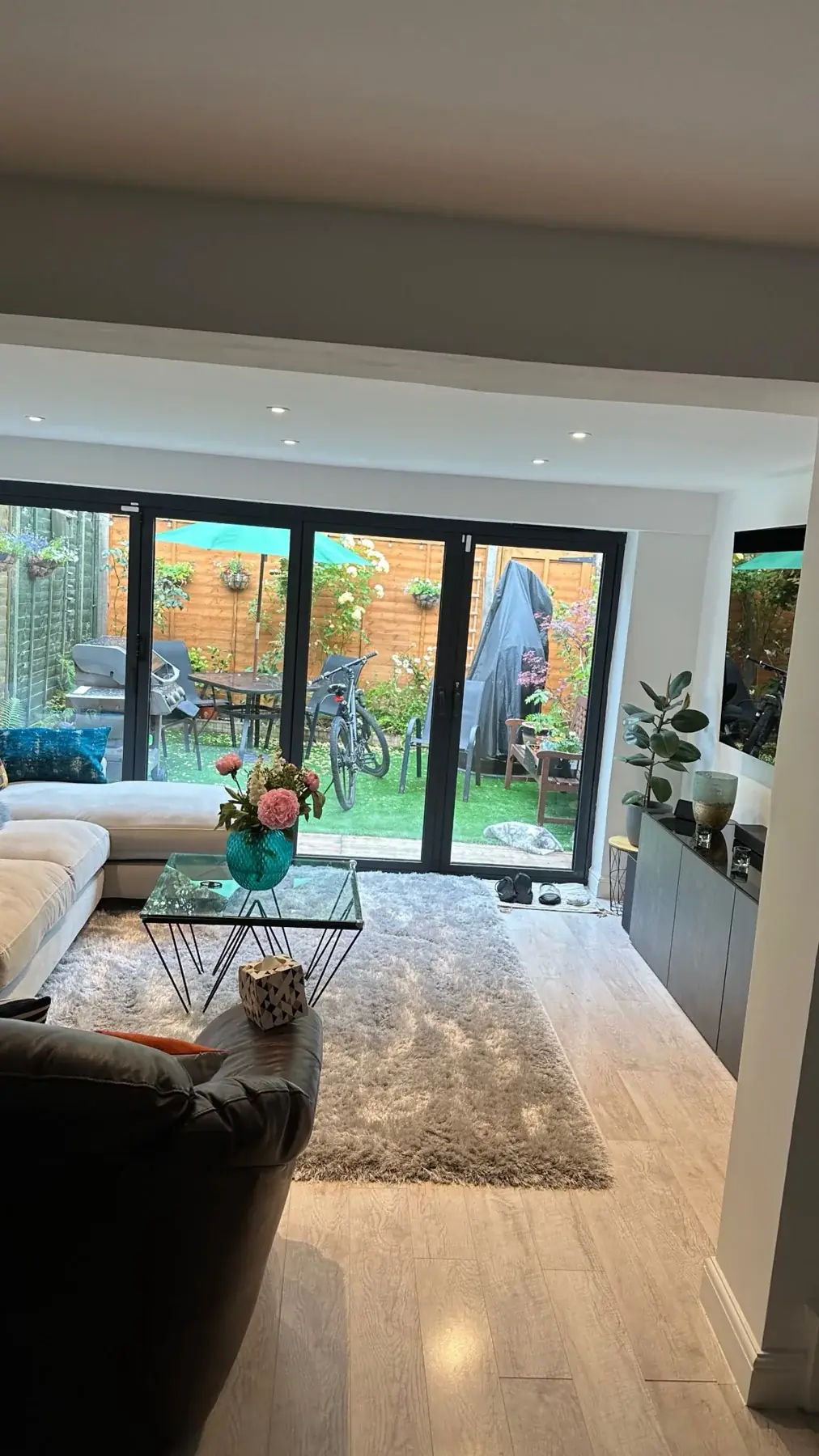
What final checks make sense when a door is handed over?
Check swing, latch action, gaps, floor clearance and the condition of the surrounding trim. It is also sensible to confirm any maintenance notes for the hardware and whether further making-good is expected elsewhere in the room.
Why should door work consider circulation routes?
Because the way a door opens can affect stairs, corridors and furniture placement. A well-sized door can still feel awkward if it creates a pinch point in a narrow route or clashes with another opening.
Should the frame be replaced whenever a door is changed?
Not always. If the existing frame is sound and properly aligned, it may be retained. The decision should come from the opening’s condition and the door’s intended use, not from habit alone.
Planning and project guidance
- Planning policy and guidance | Royal Borough of Kingston upon Thames
- GOV.UK · Planning permission
- GOV.UK · Building regulations approval
- GOV.UK · Party walls and building work
Check the current guidance for your address before relying on a planning route. This guide is not a planning decision or a verified local case study.
Other services in Surbiton








