Renovation vs Refurbishment: What's the Difference?
The short answer
Renovation vs refurbishment is mostly about scope, not a neat legal split. In practice, refurbishment usually means improving an existing space with limited structural change, while renovation often involves deeper repairs, reconfiguration or upgrading services. The right label matters less than what is being changed, what stays, and which approvals may apply. For homeowners, a clear scope beats vague wording every time, especially when comparing house renovation services and quotes via [/quote/].
Contents of this guide
- What the terms usually mean in everyday building work
- Cosmetic refurbishment: the lighter end of the spectrum
- When renovation goes beyond finishes and into structural or functional change
- Repairs, reconfiguration and services: the real drivers of complexity
- How to brief a project so the label does not cause confusion
- Approvals and compliance depend on the actual work, not the label
- Typical cost factors that make refurbishments and renovations diverge
- Choosing the right route for your home and your timeline
- Questions homeowners ask
- Sources
What the terms usually mean in everyday building work
In day-to-day construction conversations, renovation vs refurbishment is less about strict definitions and more about the amount of intervention. Refurbishment usually suggests bringing a room or property up to a better standard without fundamentally changing how it works. That could mean new finishes, redecoration, replacement of tired fittings, or careful upgrading of existing elements while keeping the same layout. Renovation is often used when the work goes further and starts to alter the condition, function or arrangement of the property.
The trouble is that people, contractors and estate agents often use the words differently. One person’s refurbishment might include new electrics and a bathroom refit; another’s renovation might mean stripping everything back to the shell. That is why the label itself should never be the only thing you rely on. A good brief explains the rooms involved, what is being kept, what is being removed, and whether the project needs house renovation services because the work goes beyond surface improvement.
Cosmetic refurbishment: the lighter end of the spectrum
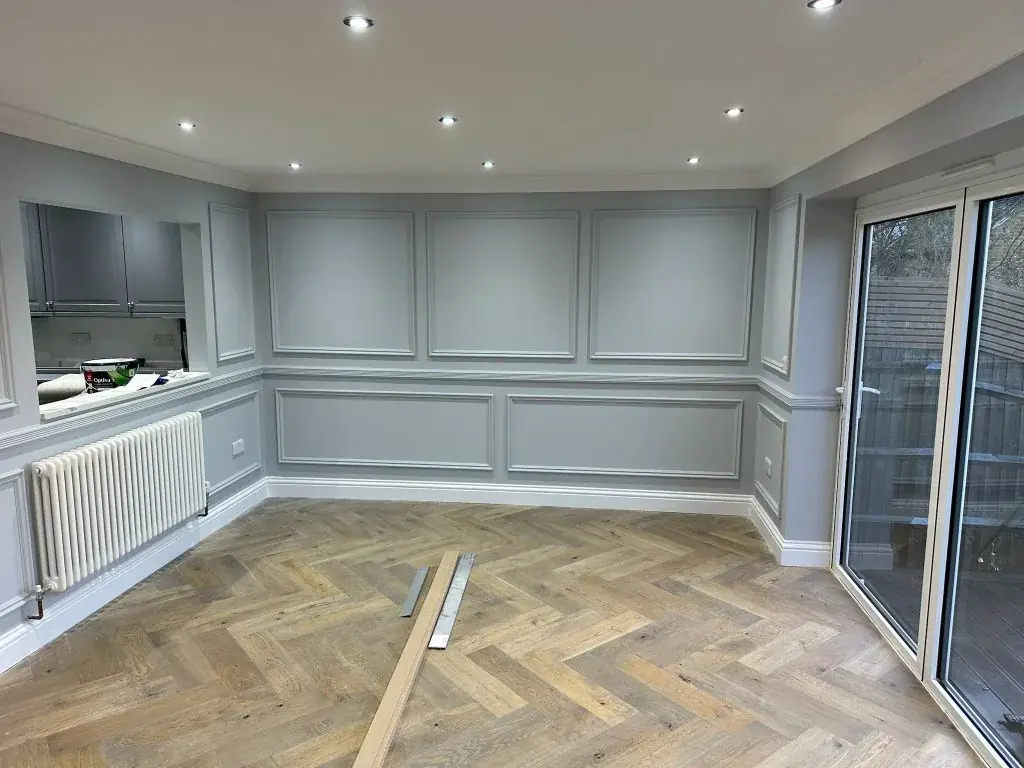
A cosmetic refurbishment is typically about appearance, comfort and finish rather than structure. It may include painting, plaster repairs, flooring replacement, new kitchen cabinet fronts, replacing sanitaryware in the same positions, improved lighting, or upgrading tired internal doors and ironmongery. The aim is often to refresh a home that is functionally sound but looks dated or worn. For many homeowners, this is the quickest way to make a property feel cleaner, brighter and more usable without opening up the whole house.
That said, cosmetic work can still uncover hidden issues. Once old coverings are removed, contractors may find damaged plaster, failing pipework, poor subfloors or previous patch repairs that need attention before new finishes go in. Good refurbishment planning therefore includes some allowance for making good, even when the visible intention is modest. If you are comparing contractors, ask them to describe exactly what is included under the refurbishing scope and what counts as an extra, rather than trusting a vague “full refurbishment” description.
When renovation goes beyond finishes and into structural or functional change
Renovation usually implies a broader intervention than a cosmetic refresh. It may involve reconfiguring internal layouts, removing or building new partitions, opening rooms together, replacing windows or doors, redesigning a kitchen and utility arrangement, or bringing older services into line with modern use. In some homes, renovation also means correcting years of piecemeal alterations so the property works as a coherent whole. The more the project changes how the house is used, the more likely it is to be treated as a renovation rather than a light refurb.
This is where scope beats labels. Two jobs described as “refurbishment” may be completely different in cost and complexity if one is simply decorative and the other includes plumbing, heating alterations and structural opening-up. The same is true of a “renovation” that is mostly finishes versus one involving a lot of hidden fabric work. When briefed properly, a builder can explain the likely sequence, the dependencies between trades, and where specialist input may be needed. If you are unsure how far your project should go, reviewing similar examples on /projects/ can help you frame the right questions before seeking a quote.
Repairs, reconfiguration and services: the real drivers of complexity
A useful way to think about renovation vs refurbishment is to separate the work into three buckets: visible finishes, physical layout, and building services. Finishes include decoration, flooring and joinery surfaces. Layout covers walls, openings, circulation and room use. Services include plumbing, heating, ventilation, electrics and drainage. The more your project moves from the first bucket into the second and third, the more likely it is to need detailed surveying and coordinated trades rather than straightforward decorating work.
This matters because services and structure drive many of the practical risks. A room can look simple on paper but still require careful planning if pipe routes, consumer units, heating controls or extract ventilation need changing. In older London and commuter-belt homes, there may also be hidden issues behind walls and floors that only become clear after investigation. That does not mean every project needs a major overhaul, only that the label should not hide the real scope. A detailed scope schedule helps contractors price the same work on the same basis and keeps assumptions visible from the start.
How to brief a project so the label does not cause confusion
The best renovation brief is written in plain language. Start with what you want the home to do better: more light, better storage, a larger kitchen-diner, improved energy use, a fresher finish, or a more coherent layout. Then describe the rooms, walls, fittings and services involved. If you are aiming for a light update, say so. If you expect hidden repairs, new services or altered walls, say that too. This is more useful than relying on the words refurbishment or renovation on their own.
Ask each contractor to price from the same assumptions. For example, does their figure include making good after electrical changes? Are they allowing for replastering after pipework alterations? Are doors being replaced or reused? Is kitchen demolition included? Are finishes like tiles, flooring, taps and lighting included or excluded? These clarifications make quote comparisons far more reliable than a project title alone. If you want a starting point for a broader home update, house renovation services are usually the right category to explore, while get a quote gives a clearer route to a scoped discussion.
Approvals and compliance depend on the actual work, not the label
Whether a project is called a renovation or refurbishment, the real question is what the work involves. In England, planning permission is separate from building regulations, and both may be relevant depending on the proposal. Major changes or new building work may need planning consideration, while building regulations can apply to many alterations, including structural changes and certain work to windows, doors, heating, bathrooms and electrical installations. The wording on a brochure or quote does not decide this; the physical scope does.
For homeowners, the practical approach is to flag the intended changes early so the right checks can be made. A modest internal refurb may have little formal involvement, while a deeper renovation could need more coordination with building control or other parties. If work affects a shared wall or boundary, the party-wall process may also come into play. For some homes, especially where previous alterations were informal, careful documentation matters because completion evidence can be important later when selling. The safest route is to treat the project plan as the trigger for compliance checks, not the headline term.
Typical cost factors that make refurbishments and renovations diverge
Because renovation vs refurbishment is mostly about scope, cost differences usually come from what is hidden rather than what is visible. A simple refurbishment may mainly involve labour, replacement finishes and some making good. A more involved renovation can add demolition, temporary protection, waste removal, structural opening-up, new services, joinery changes and more time spent coordinating trades. Even where two projects cover the same room, the presence of old wiring, uneven floors or outdated pipework can change the whole picture.
DWM has not supplied verified price ranges, so it is better to look at cost in terms of scope and exclusions rather than expecting a neat label to set the budget. Compare what is included in materials, labour, removal of waste, decorating, fittings, design input and any specialist surveys. Also ask what is not included, because exclusions often explain why two quotes differ more than the headline number does. The most helpful quote is the one that spells out assumptions clearly, which is why /quote/ should be used only after you have a sensible brief.
Choosing the right route for your home and your timeline
If your property is structurally sound and you mainly want a new look, refurbishment may be the sensible route. If you need to improve the layout, replace ageing services or solve long-standing defects, renovation is probably the better description. In many real homes, the answer sits somewhere between the two. That is normal. A project can start as a cosmetic refresh and evolve into a deeper renovation once hidden conditions are opened up, or it can be planned as a renovation but delivered in phases so the budget and disruption are manageable.
The useful question is not “Which word sounds better?” but “What outcome do I need, and what work is required to get there?” A well-defined brief will help you decide whether a lighter refurb is enough or whether a fuller renovation will be more efficient in the long run. If you are still shaping the idea, browsing completed work on /projects/ can help you think through room-by-room possibilities, while a conversation around house renovation services can clarify whether your scheme needs design input, structural changes or just a careful refresh.
Questions homeowners ask
Is renovation the same as refurbishment?
Not exactly. In everyday use, refurbishment usually means improving or refreshing an existing space, while renovation often suggests a broader project that changes condition, layout or services. The words overlap a lot, so the safest approach is to describe the actual work rather than rely on the label alone.
Which word should I use when asking for quotes?
Use whichever word feels closest, but always add a clear scope. Say what rooms are involved, what is being removed, what is being replaced and whether layout or services are changing. That gives contractors something measurable to price and makes it easier to compare different quotes on a like-for-like basis.
Does a refurbishment need planning permission?
Sometimes, but not always. Minor internal refresh work may not need planning, whereas larger changes or external alterations can. In England, planning permission depends on the actual works, the property and any relevant restrictions. It is best to check the proposed scope with the local planning authority or a professional adviser.
Can a renovation include both repairs and decoration?
Yes. Many projects combine repair work, reconfiguration and finishing. For example, a renovation might include fixing damaged walls, replacing old services, altering a room layout and then decorating throughout. The important thing is to list the elements separately so each trade, material and allowance is clear in the scope.
Why do two refurbishment quotes vary so much?
Usually because the scope is different. One quote may include making good, waste removal, replacement fittings and decorating, while another may only cover labour or a narrower set of tasks. Differences in assumptions, exclusions and hidden-condition allowances often matter more than the headline description of the project.
Sources
- GOV.UK: Planning permission
- GOV.UK: Householder permitted development guidance (England)
- GOV.UK: Building regulations approval
- GOV.UK: Party walls and building work
General guidance for homeowners, not a substitute for advice on your specific property. Rules change; check the current position with your council or a qualified adviser.
Share this article
Related services
house renovation servicesTalk it through with the people who build it.
Free consultation, honest advice and a fixed written price.