
Waltham Forest · East London
Skimmingin Chingford.
A skim coat can refresh a room without replacing every wall lining, but it is only as good as the surface beneath it. The decision is less about colour or sheen and more about whether the existing wall or plasterboard is ready to take a thin finish.

- Service
- Skimming
- Neighbourhood
- Chingford
- Borough
- Waltham Forest
- Next step
- Discuss your project
Your project brief
Decide if the background is suitable before choosing skim coat
Sound plasterboard or stable existing plaster can often be skimmed, but only after any loose material, cracks or minor defects are dealt with. If the background is unstable, the finish will not cure the underlying problem and may fail again.
For a family room that needs to stay adaptable, a skim can be a tidy way to improve the surfaces without altering the layout. For example, if the room may later change from play space to study, a restrained finish can keep future decorating options open.
Local checks for skim work in Chingford
If skimming is part of a broader refurbishment in Waltham Forest, check whether the property sits within a conservation area or is listed before planning linked external changes. The council’s guidance identifies several designated areas, but the exact address still needs checking. Internal skimming by itself is usually a householder maintenance decision, yet associated alterations, such as new openings or external updates, may need a separate route.
Design decisions
Keep the surface prep and decoration separate
Skimming should be planned as finishing work, not as a substitute for structural repair or full reboarding. The scope needs to say whether minor making good is included, and which defects will be left for a different repair method.
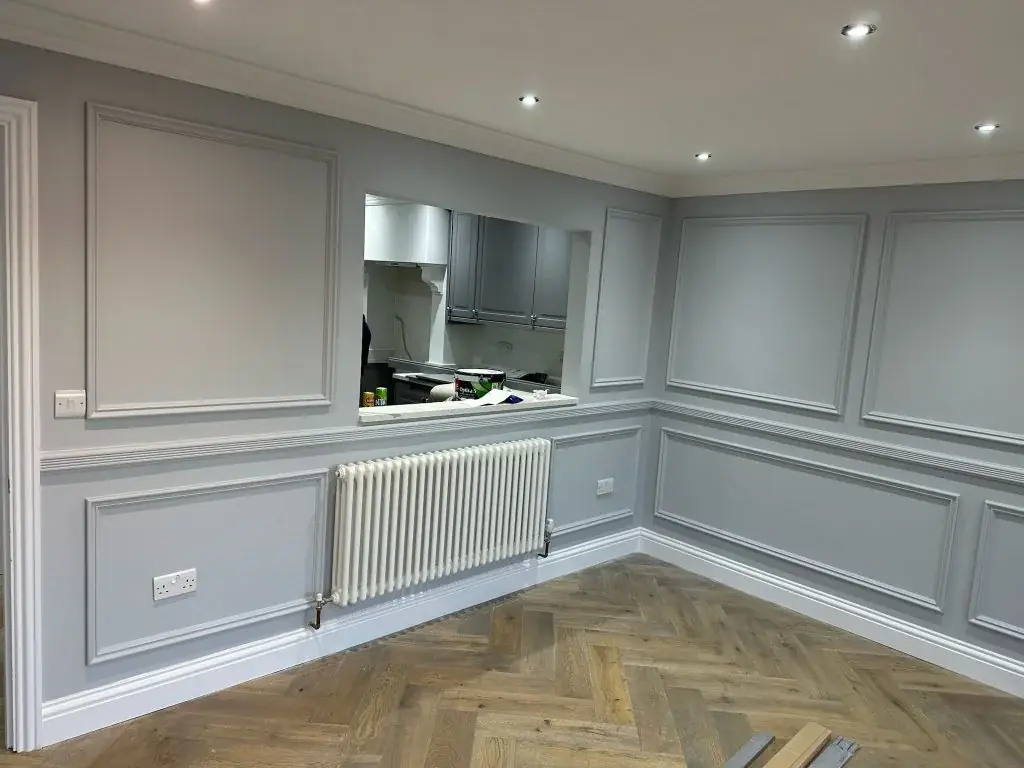
Decoration should be agreed afterwards, once the skim has cured and the room can be assessed in proper light. That separation helps avoid rushed painting decisions and gives a cleaner result around corners, joints and the edges where new and old surfaces meet.
Design checks
Four things we confirm before drawing a skim finish.
- 01Check that the wall or board is sound enough for a thin finish.
- 02Separate minor surface defects from larger repairs before the quote is agreed.
- 03Plan skimming after the messy building work, not before it.
- 04Allow decoration to be scheduled once the finished surface has cured.



What kind of surface is usually suitable for skimming?
A surface that is stable, reasonably flat and free from loose material is usually suitable. If the background is damaged or moving, it normally needs proper repair before any skim is applied.
Why shouldn’t skimming be used to hide every defect?
Because a thin finish cannot correct deeper problems in the wall. If cracks, hollowness or unevenness are serious, you need a more suitable repair method first, otherwise the issue can return through the finish.
When should I think about decoration after skimming?
Once the skim has cured and the room has been checked in normal light. That helps you decide whether the finish needs further preparation before paint or wallpaper is applied.
Planning and project guidance
- Conservation areas and listed buildings | London Borough of Waltham Forest
- GOV.UK · Planning permission
- GOV.UK · Building regulations approval
- GOV.UK · Party walls and building work
Check the current guidance for your address before relying on a planning route. This guide is not a planning decision or a verified local case study.
Other services in Chingford








