
Essex · County-wide enquiries
Decoratingin Essex.
Decorating is where a room starts to feel finished, but the result depends on the work done beforehand. Good decorating is not only about colour choice; it is also about the sequence, the condition of the surfaces and how the different finishes meet one another.

- Service
- Decorating
- Coverage
- Essex
- County
- Essex
- Next step
- Discuss your project
Your project brief
Choose finishes that suit the room’s shape and use
Wallpaper, paint and feature surfaces all change how a room reads. If the room has awkward proportions, a careful finish can help guide the eye, but it will not fix poor layout. A smaller alternative may be better when the room already has enough furniture and circulation pressure, because simpler finishes can keep the space calmer.
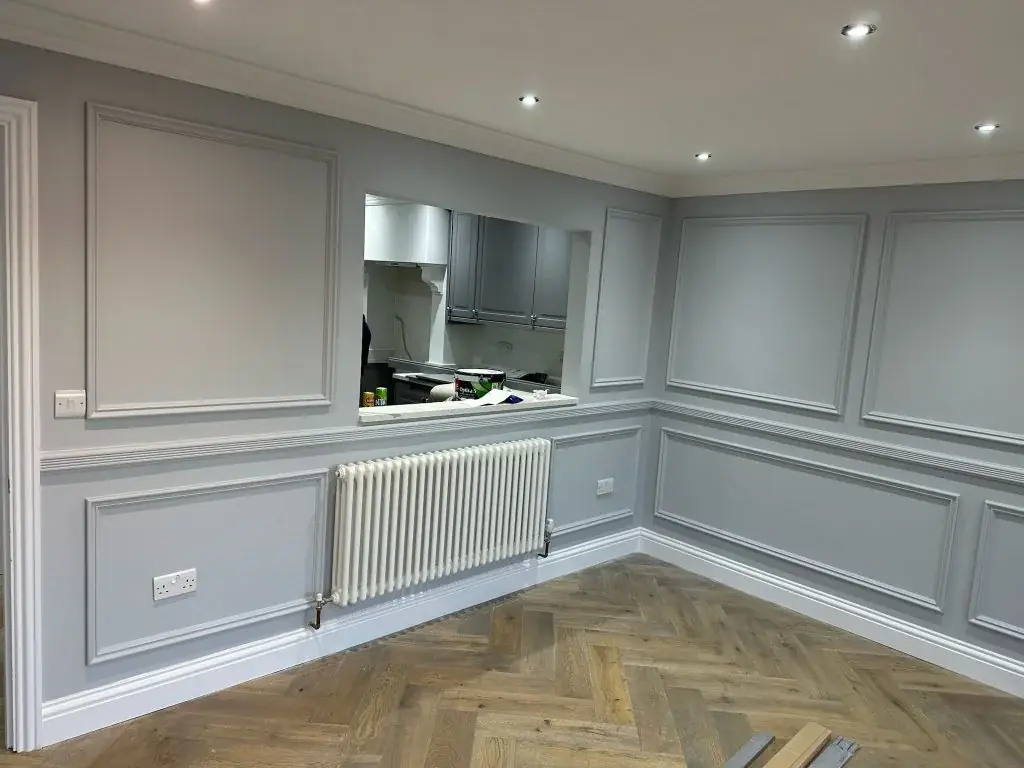
Integrated detail matters too. Door frames, skirting, corners and junctions should be considered together so the finish does not look assembled in pieces. The best result comes from deciding early where one material stops and another begins, rather than leaving those lines to be worked out on the day.
Essex checks before choosing the final finish
DWM Construction welcomes decorating enquiries across Essex, including Chelmsford, Brentwood, Epping, Colchester and Billericay. The county is only a starting point for address checks: the exact property should be used to identify the correct planning authority and any site-specific constraints before you assume a nearby decoration scheme is relevant.
Design decisions
Sequence the decorating after the messy work is finished
Decorating should usually come after the disruptive building work, not during it. Once plastering, joinery and other dusty trades are complete, the background can be prepared for the final finish. That order reduces damage and makes it easier to keep edges, patterns and trim lines clean.
If wallpaper is part of the brief, the quality of the wall beneath it matters as much as the paper itself. The scope should state whether the background is ready, whether minor defects are included, and whether final decoration is meant to follow a refurbishment or stand alone.
Design checks
Four things we confirm before drawing decorating work.
- 01Decide which surfaces need paint, wallpaper or both.
- 02Check that the walls and trims are ready for the chosen finish.
- 03Agree where feature areas stop and standard finishes begin.
- 04Schedule decorating after disruptive trades have finished.




What makes decorating different from simple painting?
Decorating includes the way finishes work together, not just the coating itself. Wallpaper, feature walls, trim details and the order of work all affect the final result, especially in rooms where the edges are highly visible.
How should I choose between a feature wall and a simpler scheme?
Think about the room’s proportions, daylight and furniture. A feature wall can help focus the eye, but if the room is already busy, a calmer scheme may make it feel more usable and less crowded.
Why should decorating wait until other work is finished?
Because dust, movement and trades working nearby can damage the finish. Decorating last helps protect the result and avoids paying twice to repair fresh surfaces after later building work.
Planning and project guidance
- GOV.UK · Planning permission
- GOV.UK · Building regulations approval
- GOV.UK · Party walls and building work
Check the current guidance for your address before relying on a planning route. This guide is not a planning decision or a verified local case study.
Other services in Essex








