
Westminster · Central London
Decoratingin Paddington.
Decorating succeeds when the room is ready for it. Whether the finish is paint, wallpaper or a mix of both, the key choices are about preparation, sequence and where the room ends if other work is still going on elsewhere.

- Service
- Decorating
- Neighbourhood
- Paddington
- Borough
- Westminster
- Next step
- Discuss your project
Your project brief
Choose the finish according to the room’s condition and use
A wallcovering may suit one room, while painted finishes suit another, but the background still has to be stable and prepared. Drawings will not tell you whether the substrate is smooth enough, whether corners are true, or whether earlier work has left visible irregularities that need correcting first.
Set out the assumptions in the scope. For example, note whether the decorating follows recent plastering, whether surfaces need lining, and whether the finish depends on other trades being complete. That makes the project order clearer and avoids treating decoration as a cure for unfinished preparation.
Westminster document checks if decorating is part of a larger scheme
Westminster’s planning checklist asks for plans, drawings, and, where relevant, photographs and heritage-related statements. Decorating on its own is not automatically treated the same as structural alteration, but if it forms part of a wider home change the exact address must still be checked against the council guidance. The borough evidence helps identify the route; it does not prove every property in Paddington needs the same submission.
Design decisions
Coordinate the decorative stage with the building work around it
Decorating should usually come after the disruptive work, especially if the room sits beside a refurbishment or addition. Otherwise the detail at trim, reveals and junctions can be damaged by later cutting, fitting or adjustment. The same logic applies if rooms behind or below are still being worked on.
Assess the impact by checking where the final lines will sit against existing finishes and which rooms need to remain clean or usable during the process. A careful sequence keeps the decorative result coherent instead of patchy.
Design checks
Four things we confirm before drawing decorating work.
- 01Confirm the background is ready before the decorative finish is agreed.
- 02Separate preparation, wallcoverings, painting and final detailing in the scope.
- 03Plan the sequence so other trades do not damage completed decoration.
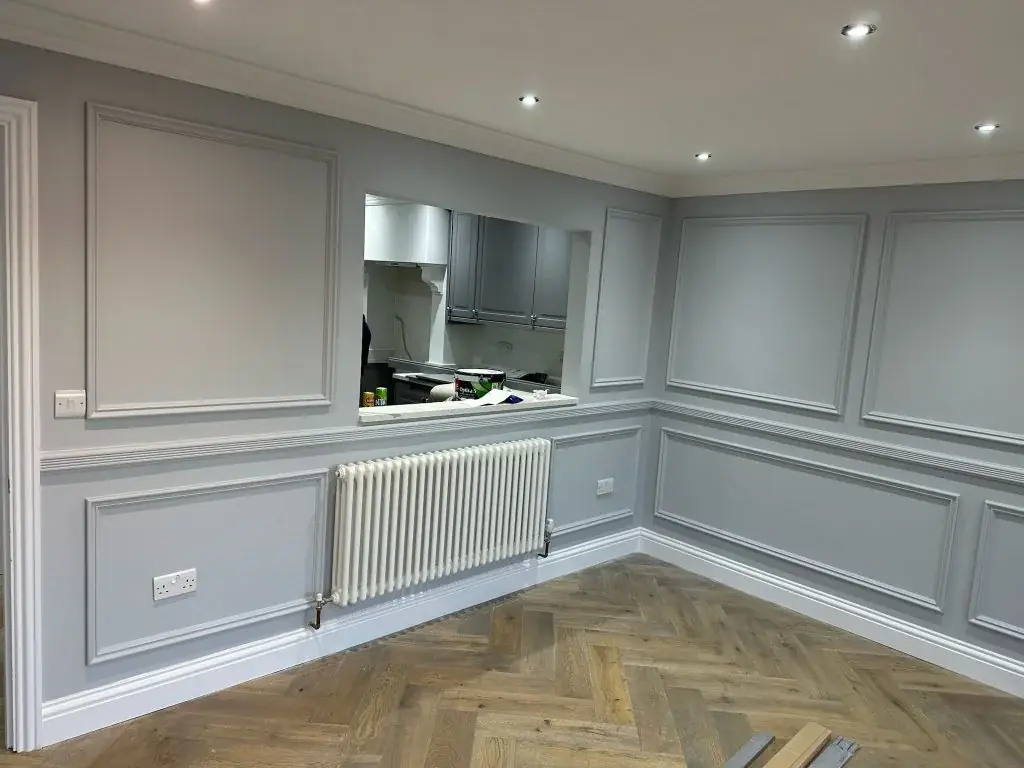
- 04Check trims, junctions and feature areas carefully before handover.




Questions
Before you call about Paddington.
What is the biggest mistake when decorating follows building work?
Starting too early, before dust, adjustments and wet trades are finished. Decoration is easiest to get right when the room is stable and the surfaces are no longer being disturbed by other work.
How should a decorating scope handle feature walls and wallcoverings?
It should name the finish, the surface preparation needed and the exact areas covered. Feature work should not be left implied, because the detailing and the amount of labour can vary a lot from one wall to another.
Why do trim junctions matter so much in decoration?
Because they are where the room’s finish is most visible and where small inaccuracies show first. Clean junctions help the whole scheme read as deliberate, especially when several rooms are being finished together.
Planning and project guidance
- Householder application | Westminster City Council
- GOV.UK · Planning permission
- GOV.UK · Building regulations approval
- GOV.UK · Party walls and building work
Check the current guidance for your address before relying on a planning route. This guide is not a planning decision or a verified local case study.
Other services in Paddington








