
Kent · Tonbridge · Town service guide
Decoratingin Tonbridge.
Decorating is where the room begins to feel finished, but it works best when the earlier building and repair stages are complete. The main choices are about preparation, sequence and how the selected finishes will behave on the surfaces underneath.

- Service
- Decorating
- Town / city
- Tonbridge
- County
- Kent
- Next step
- Discuss your project
Your project brief
Set the finish sequence before the decoration starts
Wallpaper, paint and trim details all depend on the room being ready. If the background is damp, uneven or still moving because of earlier building work, the decorative finish should wait until those issues are dealt with, otherwise the result may fail or look uneven.
It also helps to separate the construction sequence from the desired room arrangement. For example, if a room is being refurbished, the walls may need to be repaired before a feature finish is chosen. Decoration should follow the building work, not compete with it.
Tonbridge check before external decorative changes are fixed
Tonbridge and Malling Borough Council’s guidance lists Tonbridge and Quarry Hill separately, so an exact address check is needed before external decorative choices are treated as routine for the town. Use the council mapping and the correct appraisal for the property, and confirm the current document directly if online access is difficult. The point is to check the address, not to assume every Tonbridge home is covered in the same way.
Design decisions
Match the finish to the room’s use
Different finishes suit different rooms and surfaces. A wallcovering may be fine on one wall but not on a damp-prone or heavily trafficked surface, and trim details need to be aligned with the shape and condition of the room rather than copied from another space.
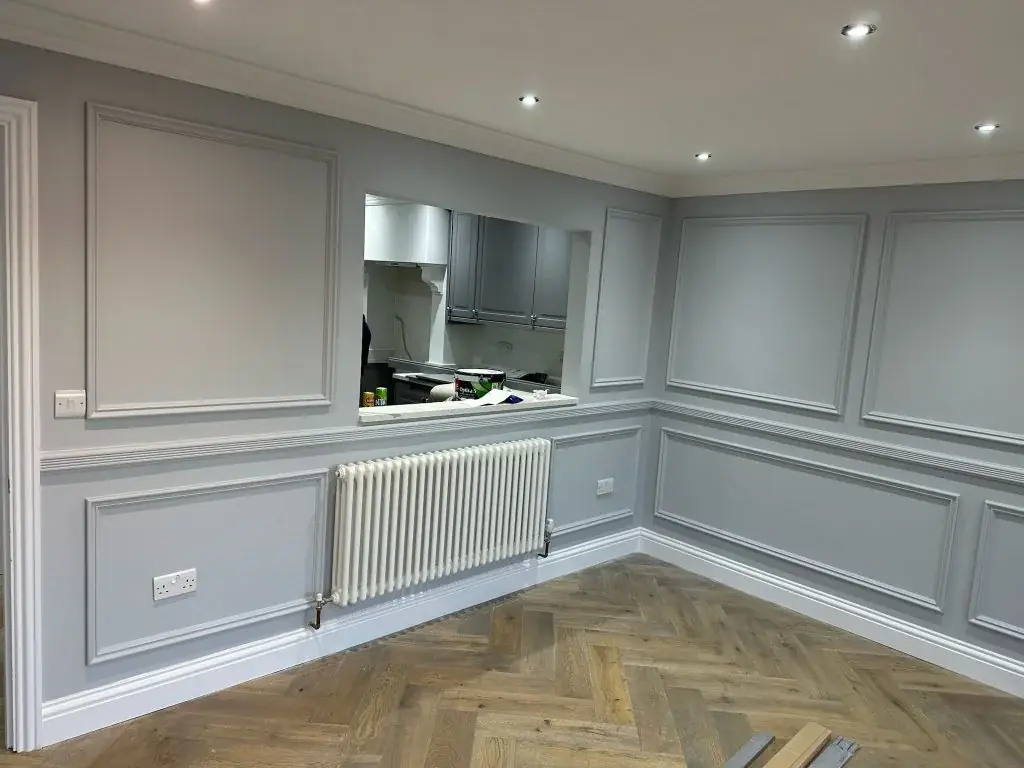
That is why the scope should explain what is to be decorated and what is already finished. Final detailing around frames, skirtings and adjoining surfaces depends on earlier trade work being complete, so the decorator is not working around unresolved building tasks.
Design checks
Four things we confirm before drawing decorating work.
- 01Confirm the background is ready before choosing wallpaper or paint.
- 02Separate any repair work from the final decorative stage.
- 03Check trim, frame and junction details before the room is finished.
- 04Plan decoration after disruptive building work, not alongside it.




Questions
Before you call about Tonbridge.
What should be done before wallpaper is selected?
The walls should be checked for soundness, dryness and the amount of preparation needed. A good paper will not disguise a weak background, so the condition of the surface is more important than the pattern alone.
How is decorating different from general building work?
Decorating is the finishing stage, so it depends on repairs, plastering and other disruptive work being complete. Its job is to refine the room, not to correct major structural or surface defects.
Why are edges and junctions so important in decorating?
Because that is where gaps, misalignment and unfinished details stand out most. Careful final trimming around frames and adjoining surfaces helps the whole room look deliberate rather than patched together.
Planning and project guidance
- Tonbridge and Malling Borough Council · conservation rules and Tonbridge and Quarry Hill appraisals
- GOV.UK · Planning permission
- GOV.UK · Building regulations approval
- GOV.UK · Party walls and building work
Check the current guidance for your address before relying on a planning route. This guide is not a planning decision or a verified local case study.
Other services in Tonbridge








