
Barking and Dagenham · East London
Decoratingin Barking.
Decorating is where a room’s finishing decisions come together, but it should come last in the sequence, not first in the conversation. The best result depends on the background being ready, the materials being suited to the room and the work being ordered in the right sequence.

- Service
- Decorating
- Neighbourhood
- Barking
- Borough
- Barking and Dagenham
- Next step
- Discuss your project
Your project brief
Choose finishes after the disruptive work is settled
If a room is still likely to have plastering, joinery adjustments or service work, the decoration should wait. Wallpaper, paint and trim details all depend on the surfaces being stable and the layout being fixed. Decorating too early often means damage, patching or colour mismatch later.
A practical brief might be to refresh one room after refurbishment, or to coordinate a full-house scheme once the building work is complete. Those are different decisions. The first is about finishing an existing room; the second is about linking several spaces with a consistent standard and sequence.
Barking local checks before decorating a protected property
Barking and Dagenham’s guidance shows that conservation areas and listed buildings are separate checks, and the borough also identifies Barking Abbey as a scheduled site. For decorating inside an ordinary room, that may not change anything, but if the property is listed, work affecting its character may need separate consent. Because borough-wide evidence does not prove site status, the exact address should be checked first.
Design decisions
Treat wallpaper, feature areas and trim as separate choices
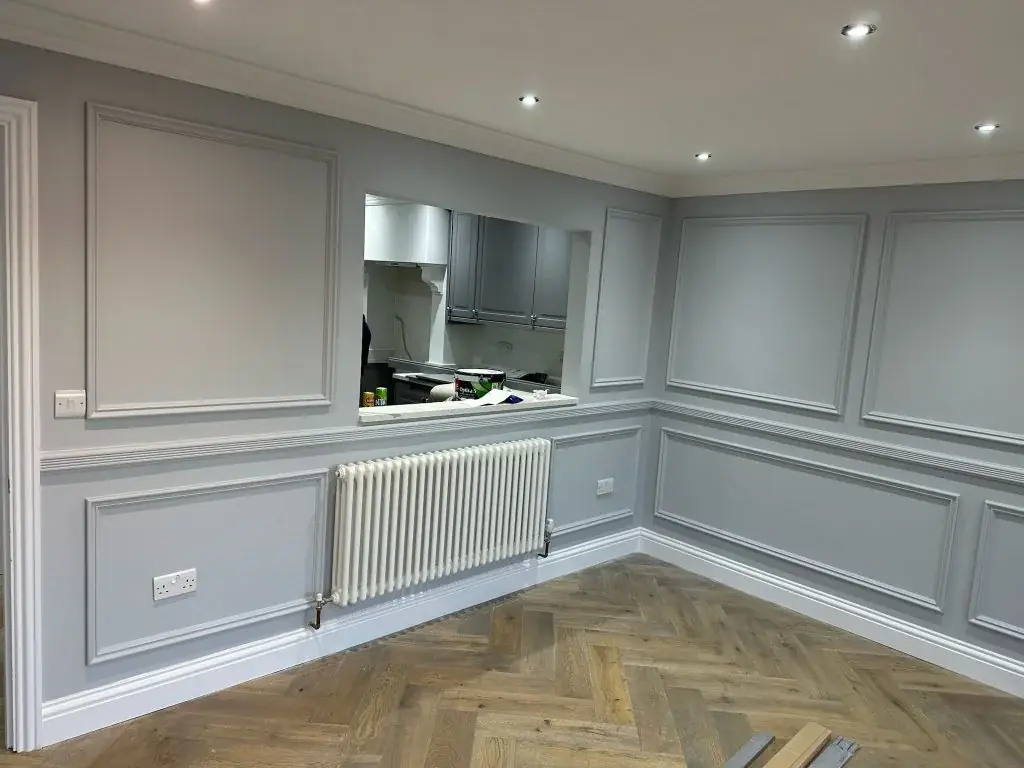
Decorating is more than applying a single colour. Wallpaper needs a suitable background and careful alignment; feature walls need to be planned against the room’s light and proportions; trim and junctions need enough preparation to look crisp rather than hurried. Each choice affects the others, so the scope should spell out what is included.
It is also useful to separate making good minor blemishes from larger repairs. That keeps the decorating budget focused on the finish itself and prevents a simple cosmetic brief from quietly becoming a repair project without agreement.
Design checks
Four things we confirm before drawing decorating work.
- 01Wait until the building work is finished before final decorating.
- 02Confirm whether wallpaper, paint or both are included.
- 03Agree what making good is allowed and what is separate repair work.
- 04Check trim, junctions and room sequence before starting finish coats.




How do I avoid decorating too early in a refurbishment?
Make sure all messy or adjustable work is complete first. If plastering, joinery or service changes are still pending, the finish risks damage and may need to be redone.
What should be clear in a decorating brief?
It should state which rooms are included, whether wallpaper or paint is being used, what preparation is expected, and which minor repairs are included. That keeps expectations realistic and measurable.
Why does trim detail matter so much in decorating?
Because neat junctions are what make the finish look deliberate. If skirting, frames and edges are not prepared well, even good colour choices can look unfinished or uneven.
Planning and project guidance
- Conservation areas and listed buildings | London Borough of Barking and Dagenham
- GOV.UK · Planning permission
- GOV.UK · Building regulations approval
- GOV.UK · Party walls and building work
Check the current guidance for your address before relying on a planning route. This guide is not a planning decision or a verified local case study.
Other services in Barking








