
Buckinghamshire · Beaconsfield · Town service guide
Decoratingin Beaconsfield.
Decorating is where the room finally comes together, but it only works if the earlier stages have left a stable surface behind. In Beaconsfield, the decisions that matter are background preparation, finish compatibility and the order in which the room is completed.

- Service
- Decorating
- Town / city
- Beaconsfield
- County
- Buckinghamshire
- Next step
- Discuss your project
Your project brief
Choose finishes that suit the room, not just the sample
Wallpaper, paint and feature finishes behave differently in use, especially around corners, trims and openings. A good-looking sample is not enough if the wall is uneven, damp or unsuitable for the product. The surface must be prepared for the finish that is actually going on, rather than adjusted later to match the decoration.
This is particularly important if the room is part of a larger refurbishment. The decorative scope should say whether the surfaces are already ready, whether lining is needed and whether the job includes only the visible finish or some minor making good too. That helps avoid confusion once materials are on site.
Beaconsfield finishing checks before decorating begins
For Beaconsfield, begin with the exact address and then check whether Buckinghamshire Council’s Beaconsfield Old Town character appraisal and boundary map are relevant to the property. That local evidence does not decide the decorating method, but it may matter for any external changes linked to the project. For interior decorating, the important point is whether the surface is suitable, the background is prepared and the work is sequenced after any disruptive building stages.
Design decisions
Finish after the disruptive work, not before it
Decorating should normally be one of the last stages in a room that has had building work. If it happens too early, later trades can damage the finish, and the room may need touching up more than once. A sensible sequence protects both the result and the budget.
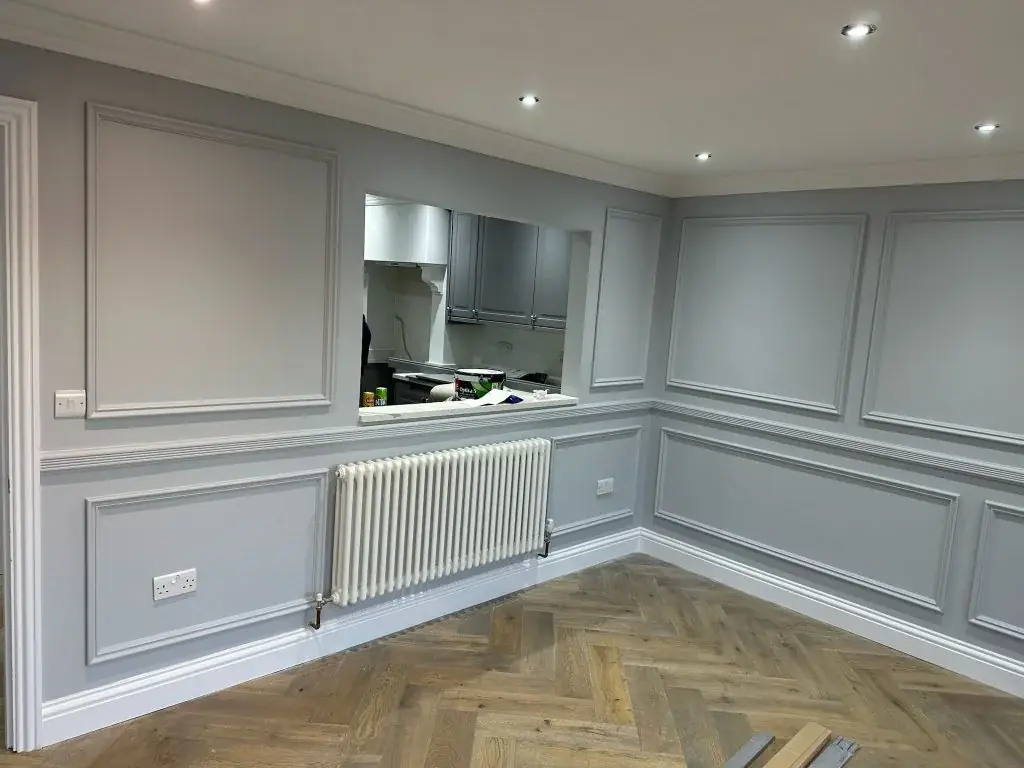
Trim junctions, frames and feature walls also need planning because they set the visual line of the room. If those details are agreed in advance, the final result looks more deliberate. That matters just as much as the colour choice itself, especially where the room has more than one surface treatment.
Design checks
Four things we confirm before drawing decorating work.
- 01Confirm the background is ready for paint or wallcovering.
- 02Agree whether lining, patching or minor making good is included.
- 03Schedule decorating after disruptive building work is finished.
- 04Check trim junctions, frames and feature-wall positions in advance.




Questions
Before you call about Beaconsfield.
What should I check before choosing wallpaper?
The wall needs to be sound, dry and suitable for the product. Heavy or patterned wallcoverings can show flaws if the background has not been prepared properly.
Why does the order of finishing matter so much?
Because decorating is easily damaged by later trades. If you paint or paper too early, even small follow-on works can spoil the finish and create extra touch-ups.
Can decorating hide poor plaster or movement?
It can improve appearance, but it will not solve unstable or damaged surfaces. The background must be sorted first if the finish is to last.
Planning and project guidance
- Buckinghamshire Council · conservation-area maps and individual character appraisals
- GOV.UK · Planning permission
- GOV.UK · Building regulations approval
- GOV.UK · Party walls and building work
Check the current guidance for your address before relying on a planning route. This guide is not a planning decision or a verified local case study.
Other services in Beaconsfield








