
Buckinghamshire · Beaconsfield · Town service guide
Renderingin Beaconsfield.
Rendering changes the outside of a building, so the choice has to suit the wall underneath as well as the appearance you want. In Beaconsfield, the key questions are whether the background is sound, how the wall handles moisture and which junctions need careful detailing.
- Service
- Rendering
- Town / city
- Beaconsfield
- County
- Buckinghamshire
- Next step
- Discuss your project
Your project brief
Match the render system to the wall construction
Different walls behave differently, especially where older construction needs to breathe or where previous coatings have failed. A render that looks tidy on the day of completion may still be wrong if it traps moisture or sits badly on a weak background. The surface therefore needs checking before the material is chosen.
If there is cracking, trapped moisture or poor rainwater detailing, those causes should be addressed as part of the work. Render is not a cover-up for an unresolved wall problem. It performs best when the substrate is stable and the edges, openings and adjoining materials have been thought through in the design.
Beaconsfield checks for external finish work
For Beaconsfield, start with the exact address and then check whether Buckinghamshire Council’s Beaconsfield Old Town character appraisal and boundary map are relevant to the property. That evidence is useful where external appearance is in question, but it does not establish a blanket rule for every home. For rendering, the important checks are wall construction, moisture behaviour, existing coatings and the junctions around openings and roof edges.
Design decisions
Think about the building’s external lines as one system
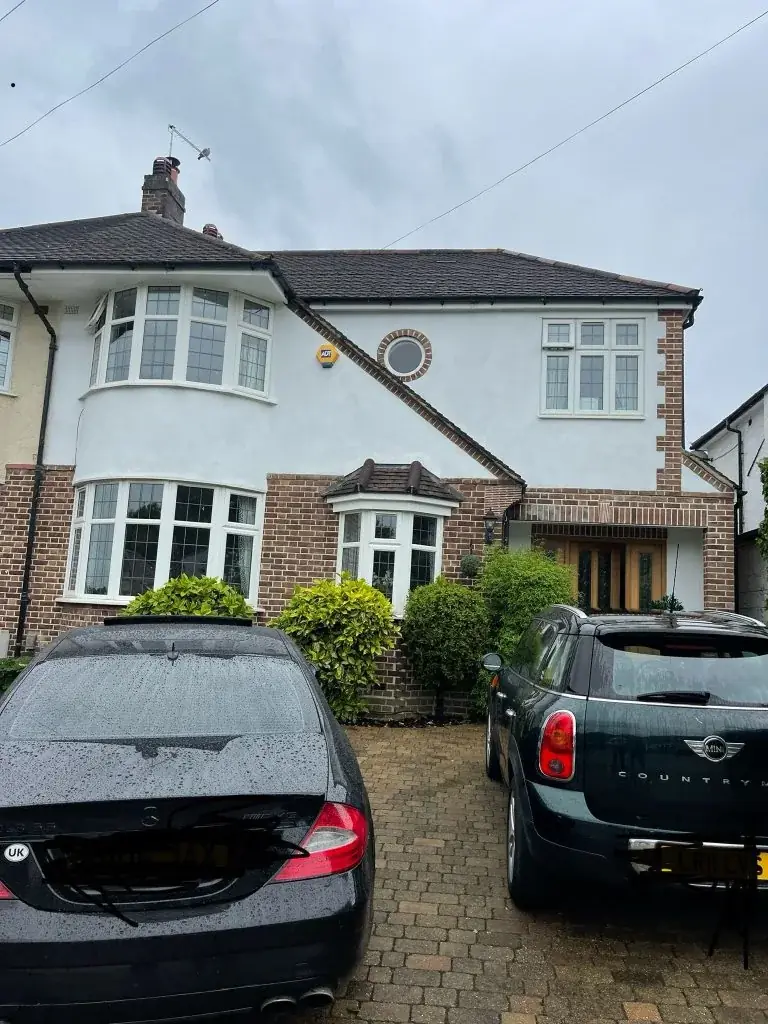
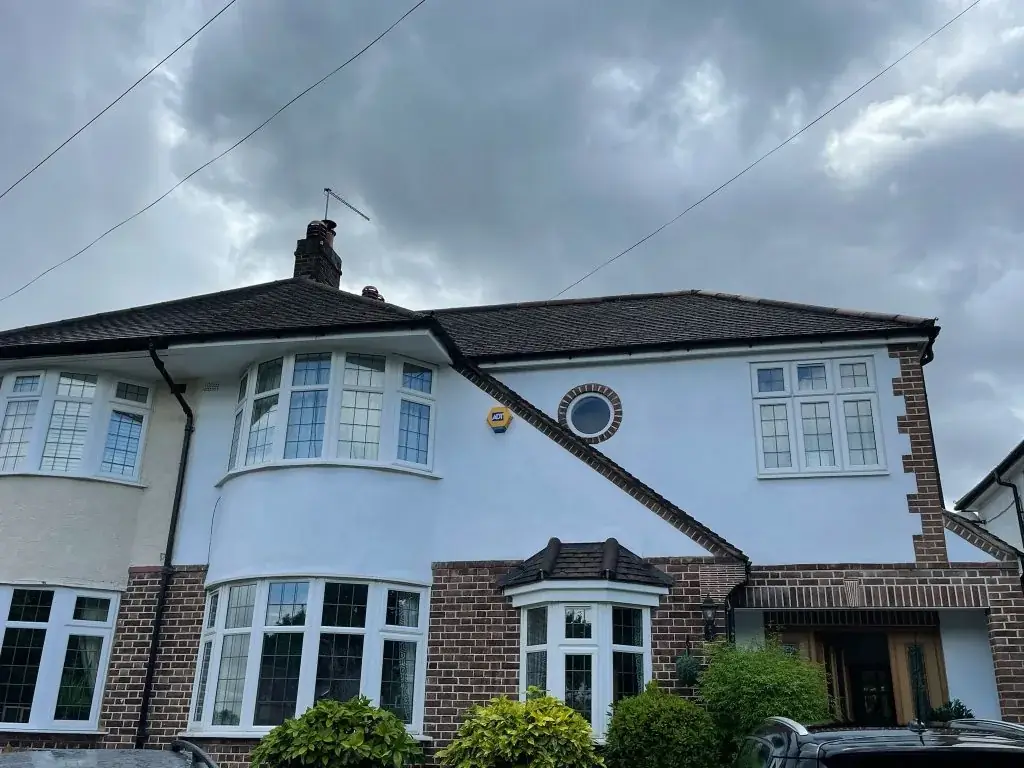
External junctions around windows, doors, roof edges and adjoining materials are where render projects often succeed or fail visually. These are the places that show whether the finish has been planned carefully or simply applied to the wall face. The scope should include how those edges are to be handled, not just the broad areas.
If the property is subject to local controls or is listed, exterior changes may need separate consent where the work affects character. That does not mean every render job is restricted in the same way; it means the address and the proposed changes need to be checked before assumptions are made. The surface and the setting both matter.
Design checks
Four things we confirm before drawing external rendering.
- 01Assess the background and its suitability for the chosen render system.
- 02Agree how failed render or damaged areas will be dealt with.
- 03Check junctions around openings, roof edges and adjoining materials.
- 04Confirm any local consent issues before changing the exterior.
Questions
Before you call about Beaconsfield.
Why can’t render be chosen just for appearance?
Because the wall underneath determines whether the finish will last. A render that suits one construction may be wrong for another if moisture movement or background strength is different.
What needs extra attention around windows and doors?
The junctions and edges. Those lines are where cracks, water paths and visual mismatches are most likely to appear if the detailing is not planned properly.
Does a local character appraisal automatically stop rendering?
No. It is evidence that may matter where applicable, but it does not prove every property in the town is subject to the same controls. The exact address must be checked.
Planning and project guidance
- Buckinghamshire Council · conservation-area maps and individual character appraisals
- GOV.UK · Planning permission
- GOV.UK · Building regulations approval
- GOV.UK · Party walls and building work
Check the current guidance for your address before relying on a planning route. This guide is not a planning decision or a verified local case study.
Other services in Beaconsfield








