
Southwark · South London
Doorsin Dulwich.
A door is more than a leaf in an opening. It has to suit the frame, the room’s use and the finishes around it. The key choices are whether the existing frame can stay, how the clearances work and what hardware is needed for the way the door will be used.
- Service
- Doors
- Neighbourhood
- Dulwich
- Borough
- Southwark
- Next step
- Discuss your project
Your project brief
Check the opening before choosing the door
Door work starts with the existing opening, not the catalogue image. The frame, lining, architraves and surrounding finishes decide whether a replacement can be straightforward or whether more making good is needed. If the door is part of a wider refurbishment, that should be made clear in the scope.
Homeowners should also ask how the door will be checked at handover: opening action, latch, alignment, clearances and the condition of the surrounding trim. That review is useful, but it does not replace any separate requirement for approval where the change affects a different part of the building or a regulated opening.
Southwark and Dulwich checks before altering a door opening
Dulwich is treated here as part of the Southwark council search area, but exact-address checks still apply. Southwark says there are conservation areas and that some alterations may need planning permission under Article 4 directions, though that does not prove the status of every property. Internal door replacement usually turns on fit and use, while altered openings or external doors may need separate checking at the property itself, especially where listed-building character or other controls could be relevant.
Design decisions
Make circulation and use part of the decision
Doors affect how rooms connect to stairs, landings and corridors, so their swing and hardware need to suit the route through the house. A well-fitted door can still feel wrong if it clashes with movement or blocks the space when opened. That is especially important in tighter circulation areas.
For example, if an internal door opens onto a landing, the handover should check that the swing works with the route and that handles, hinges and latches suit the room’s purpose. The right fit is about practical movement as much as appearance.
Design checks
Four things we confirm before drawing door installation.
- 01Confirm whether the existing frame can be retained or needs replacement.
- 02Check the door swing against the landing, corridor or nearby furniture.
- 03Agree the hardware, latch action and any making-good around the opening.
- 04Review clearances and finish before the door is treated as complete.

What is the most useful final check after a new door is fitted?
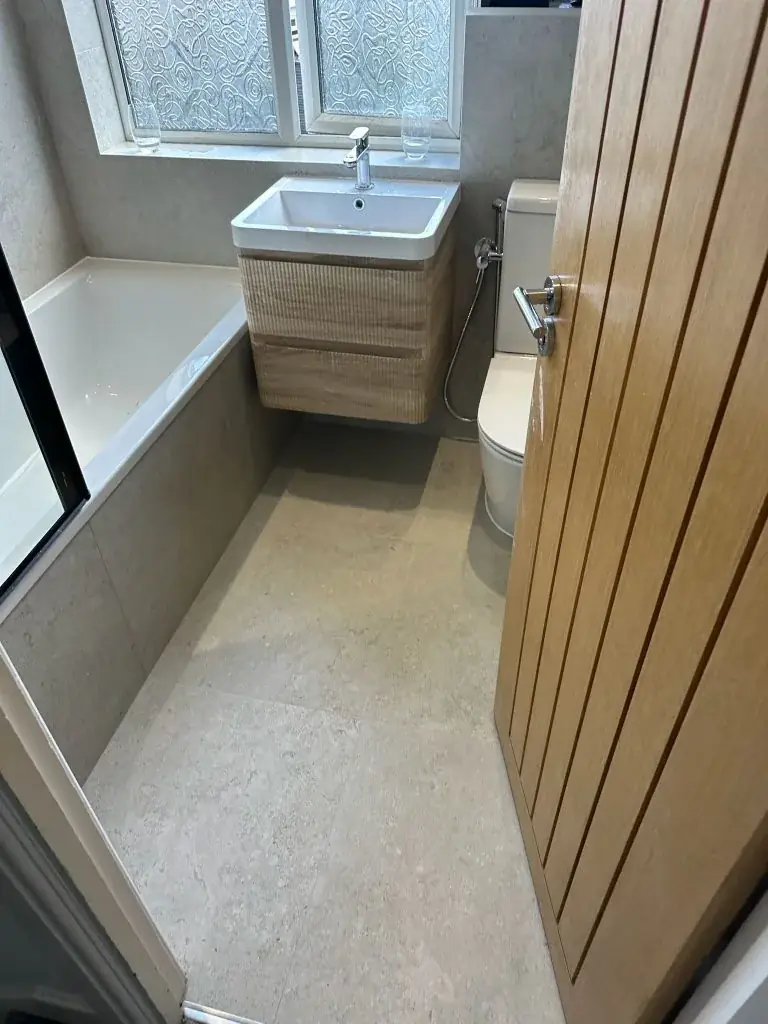
Open and close it fully, then check alignment, clearances, latch action and the trim around the frame. If the door forms part of a circulation route, make sure the swing does not interrupt everyday movement.
When does door work become more than a simple replacement?
When the opening changes, the frame is altered or the door has to meet extra performance requirements. In those cases, the scope should be broader than a like-for-like swap and should say so clearly.
Should the frame always be replaced with the door?
Not always. If the frame is sound and suitable, it may be retained. The decision depends on the condition of the opening, the required fit and how well the existing parts support the new door.
Planning and project guidance
- Conservation areas | Southwark Council
- GOV.UK · Planning permission
- GOV.UK · Building regulations approval
- GOV.UK · Party walls and building work
Check the current guidance for your address before relying on a planning route. This guide is not a planning decision or a verified local case study.
Other services in Dulwich








