
Surrey · Farnham · Town service guide
Skimmingin Farnham.
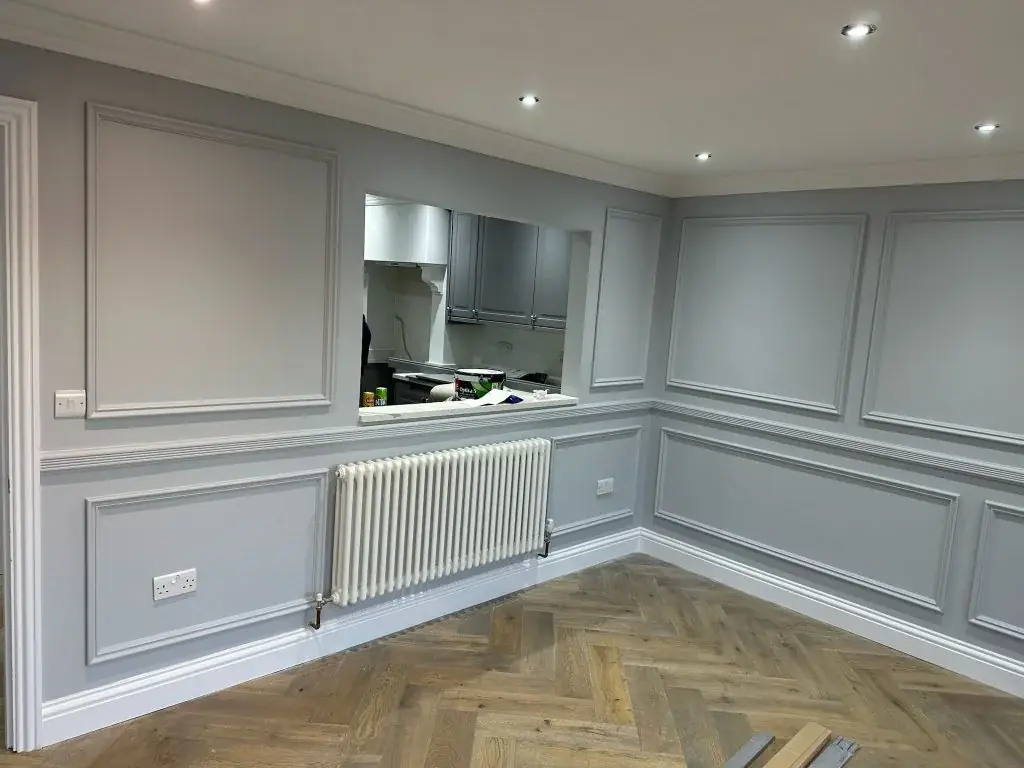
Skimming is often chosen when a room needs a cleaner finish without replacing every lining. The decision is simpler when the background is already sound; it becomes more complex when the walls or ceilings have defects that affect how the skim will bond and hold up over time.

- Service
- Skimming
- Town / city
- Farnham
- County
- Surrey
- Next step
- Discuss your project
Your project brief
Check the surface before planning the finish
A skim coat can improve a room quickly, but only if the existing surface is stable enough to take it. Paint, wallpaper paste, loose patches and glossy areas all affect adhesion, so the real first step is to assess whether cleaning, removal or a bonding layer is needed.
If the room is part of a larger refurbishment, new plasterboard can also be skimmed once the joints and fixings are ready. That gives a smoother finish, but it still depends on the board being correctly installed and the edges being made good before the final coat goes on.
Local checks for a Farnham skim coat
Farnham falls within Waverley’s planning area, so the exact address should be checked on the current council mapping if the room forms part of a wider alteration or heritage-sensitive property. Waverley’s guidance register includes the Farnham Conservation Area Appraisal and boundary, adopted on 22 February 2005, which is helpful context but not proof that every address in Farnham is affected. The local decision is usually about the room’s existing condition and whether the current policy documents need to be read alongside the property record.
Design decisions
Use skimming for refinement, not correction
Skimming is a finishing method, not a fix for a badly distorted wall or a structurally moving surface. If the room has bigger defects, those need to be dealt with separately so the skim is not asked to compensate for problems it cannot solve.
Textured coatings also need care before any finish is applied. In older buildings, disturbing them without checking their makeup can create avoidable risk, so the background should be reviewed before sanding, scraping or coating changes are planned.
Design checks
Four things we confirm before drawing a skim finish.
- 01Finish suitable plasterboard surfaces after partitions or ceiling work.
- 02Re-skim sound existing plaster where a smoother finish is wanted.
- 03Make good minor surface defects, with larger repairs identified separately.
- 04Prepare edges and junctions around windows, doors and adjoining finishes.



When is skimming better than a full replaster?
When the background is still sound and only needs a smoother surface. If the wall is badly uneven, loose or damaged, a fuller repair may be needed first so the skim has a reliable base.
Can a skim coat fix cracks and old patches?
It can improve the look of minor defects, but it should not be relied on to solve movement or weak backgrounds. Any recurring crack should be checked before the finish is chosen.
What should be ready before skimming starts?
The room should be clean, dry and adequately prepared, with repairs and junctions settled. That makes it easier to achieve a consistent finish and reduces the chance of last-minute extra patching.
Planning and project guidance
- Waverley Borough Council · Farnham appraisal and adopted planning guidance
- GOV.UK · Planning permission
- GOV.UK · Building regulations approval
- GOV.UK · Party walls and building work
Check the current guidance for your address before relying on a planning route. This guide is not a planning decision or a verified local case study.
Other services in Farnham








