
Islington · North London
Skimmingin Highbury.
A skim coat can improve a room without replacing everything behind it, but only if the existing surface is stable enough. The main decision is whether the room needs a light finishing layer or deeper repair before any skim is applied.

- Service
- Skimming
- Neighbourhood
- Highbury
- Borough
- Islington
- Next step
- Discuss your project
Your project brief
Check the background before choosing a skim
Skimming works best on surfaces that are sound and reasonably even. If the wall has movement, blown areas or heavy defects, a skim alone will not solve the underlying issue. In those cases the right answer may be repair first, or new lining if the surface is too unreliable.
This is why the condition of the wall matters more than the desire for a quick refresh. A good skim should improve the feel of the room, not mask problems that will come back through the finish.
Highbury address checks before any skim is set out
In Islington, the council’s conservation-area map and Article 4(2) information should be checked against the exact property address if there is any external alteration involved. Islington includes conservation areas such as Highbury Fields and Highbury New Park, but those listings do not tell you whether one Highbury home is affected. Internal skimming itself is a surface decision, yet related work may still need a separate check.
Design decisions
Keep the finish stage separate from repair work
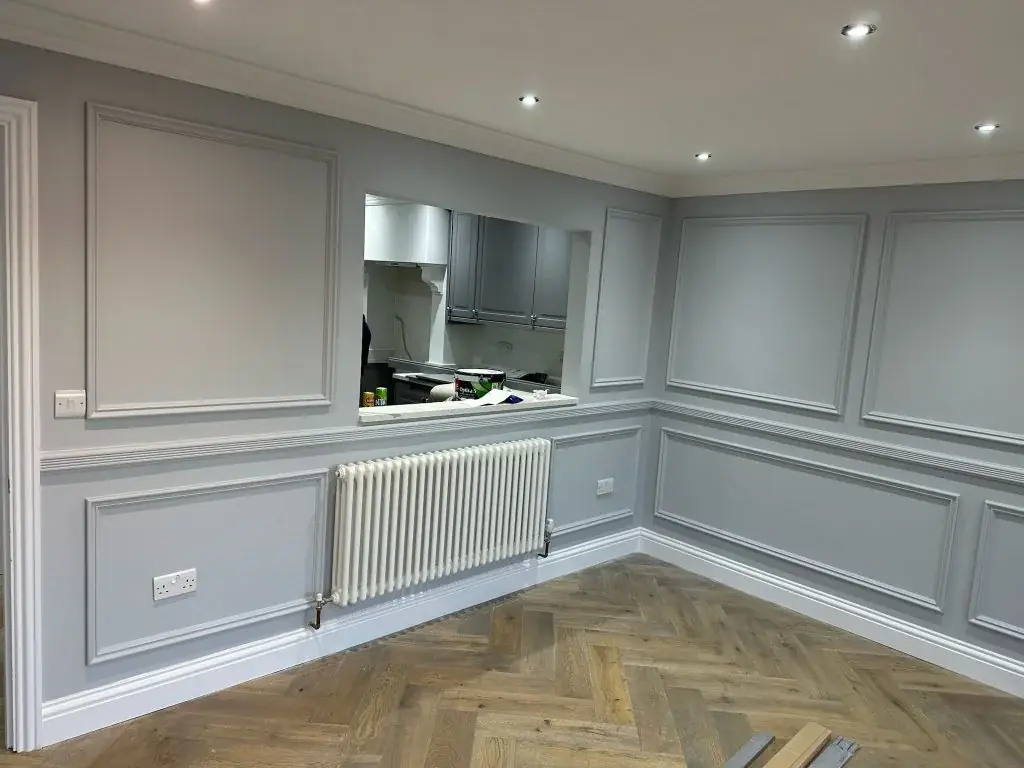
Skimming is often part of a room refresh, but it should not be confused with structural repair or decoration. Minor marks, filled chases and small imperfections can be prepared as part of the skim, while larger defects should be identified separately so there is no misunderstanding about what is being corrected.
The same applies to timing within the project. Once the background is ready, the skim can provide a clean base for paint or wallpaper. That gives the room a more consistent finish and avoids extra sanding or correction later.
Design checks
Four things we confirm before drawing a skim finish.
- 01Confirm the wall or ceiling is sound enough for a skim finish.
- 02Identify any areas needing repair, lining or patching before skimming.
- 03Separate minor making-good from larger defects in the written scope.
- 04Plan skimming so decorating can follow on a stable surface.



When is skimming better than replacing the whole wall lining?
When the existing surface is stable and just needs a smoother, more even finish. If there are serious defects or movement, replacing or relining the surface may be the better long-term choice.
Can skimming hide every defect?
No. It can improve a sound background, but it is not a cure for loose plaster, damp or structural movement. Those issues need to be dealt with first, otherwise the finish is likely to fail or show through again.
How should skimming be coordinated with decoration?
The skim should be finished and fully ready before paint or wallpaper is planned. That gives the decorator a proper base and helps the final result look consistent rather than patched and uneven.
Planning and project guidance
- Conservation areas | Islington Council
- GOV.UK · Planning permission
- GOV.UK · Building regulations approval
- GOV.UK · Party walls and building work
Check the current guidance for your address before relying on a planning route. This guide is not a planning decision or a verified local case study.
Other services in Highbury








