
Berkshire · Reading · Town service guide
Skimmingin Reading.
A skim coat can give a room a cleaner, more even feel without changing the whole wall build-up. The key decision is whether the existing surface is stable enough to skim or whether it needs repair or re-lining first, because skim only works well on the right background.

- Service
- Skimming
- Town / city
- Reading
- County
- Berkshire
- Next step
- Discuss your project
Your project brief
When skimming is the right finishing choice
Skimming is usually the sensible option when the plaster or plasterboard beneath is sound but marked by minor blemishes, old texture or patchy repairs. It can bring the room to a consistent finish without the time and loss of space involved in replacing every lining.
It is not a cure for movement, damp or badly bowed walls. The survey must settle whether the problem is purely a finish issue or whether the room needs cleaning, bonding, patch repairs or new boarding before a skim can be considered reliable.
Reading checks before agreeing a skim
Reading Borough Council’s heritage guidance directs owners to the relevant map or appraisal for the exact place, and it says to confirm the current version rather than relying on an old drawing. Use My Reading to check the address, then consider whether listing, local listing or tree controls are relevant. That local check is separate from the technical question of whether the wall is fit to skim.
Design decisions
Comparing two workable room outcomes
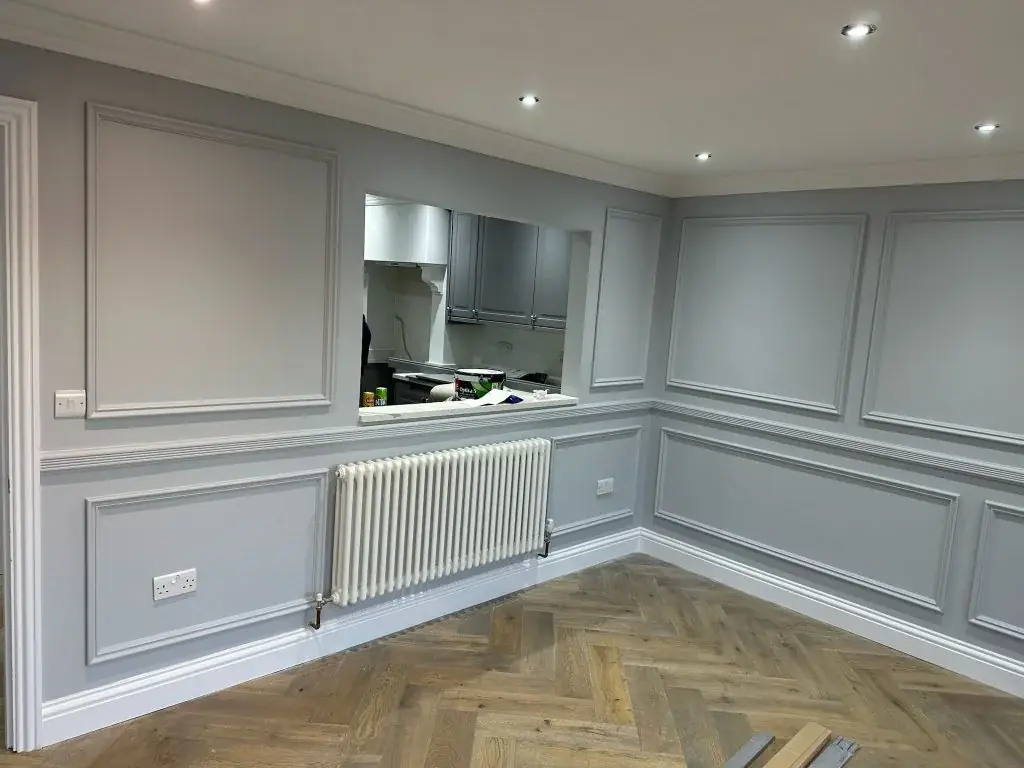
One possible brief is a quick refresh before decorating, where the aim is to smooth the existing surfaces and get the room back into use promptly. Another is a more thorough re-skim after minor repairs, where the room is being reset for a longer-term finish and better light reflection.
Those two outcomes feel different in daily use. The first prioritises speed and modest intervention; the second aims for a more uniform result. The survey should decide which route is realistic by checking adhesion, flatness, moisture and the condition of edges around windows and doors.
Design checks
Four things we confirm before drawing a skim finish.
- 01Confirm that the existing plaster or board is sound enough to finish over.
- 02Separate minor surface defects from issues needing repair or re-lining.
- 03Check edges, reveals and junctions before agreeing the skim scope.
- 04Agree the preparation needed before decorating begins.



What is the main difference between skimming and full plastering?
Skimming is a thin finishing layer over a suitable background. Full plastering may involve new boarding, base coats or deeper levelling where the existing surface is too uneven or weak for a skim alone.
Can skimming hide movement or damp marks?
No. It may cover the look of a defect briefly, but it will not solve movement or moisture. Those causes need to be identified and addressed before finishing work is chosen.
Why is the decoration stage mentioned with skimming?
Because skimming prepares the surface, while decoration completes the room. The brief should separate those stages so drying, priming and paint choice are not confused with the plastering work itself.
Planning and project guidance
- Reading Borough Council · conservation maps, appraisals and household guidance
- GOV.UK · Planning permission
- GOV.UK · Building regulations approval
- GOV.UK · Party walls and building work
Check the current guidance for your address before relying on a planning route. This guide is not a planning decision or a verified local case study.
Other services in Reading








