
City of London · Central London
Roofingin Barbican.
A roof issue is often wider than the visible patch of damp below it. The right decision is whether the problem is local and repairable, or whether the covering, junctions and underlying condition point to a larger roofing job.
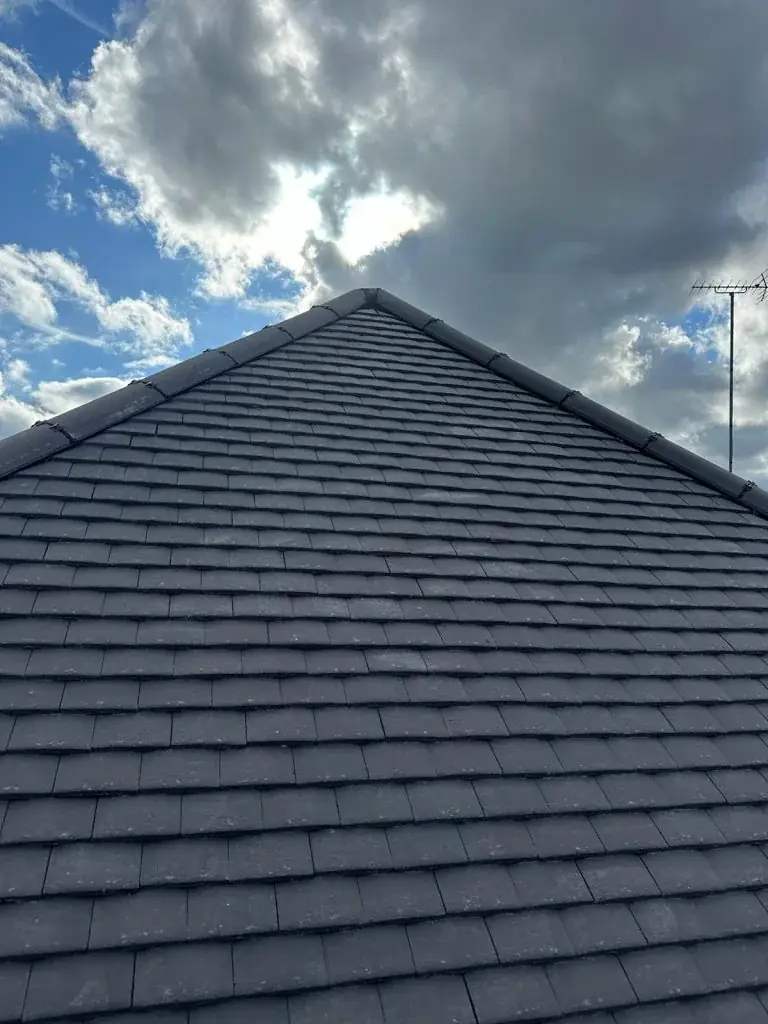
- Service
- Roofing
- Neighbourhood
- Barbican
- Borough
- City of London
- Next step
- Discuss your project
Your project brief
Find the cause before choosing the fix
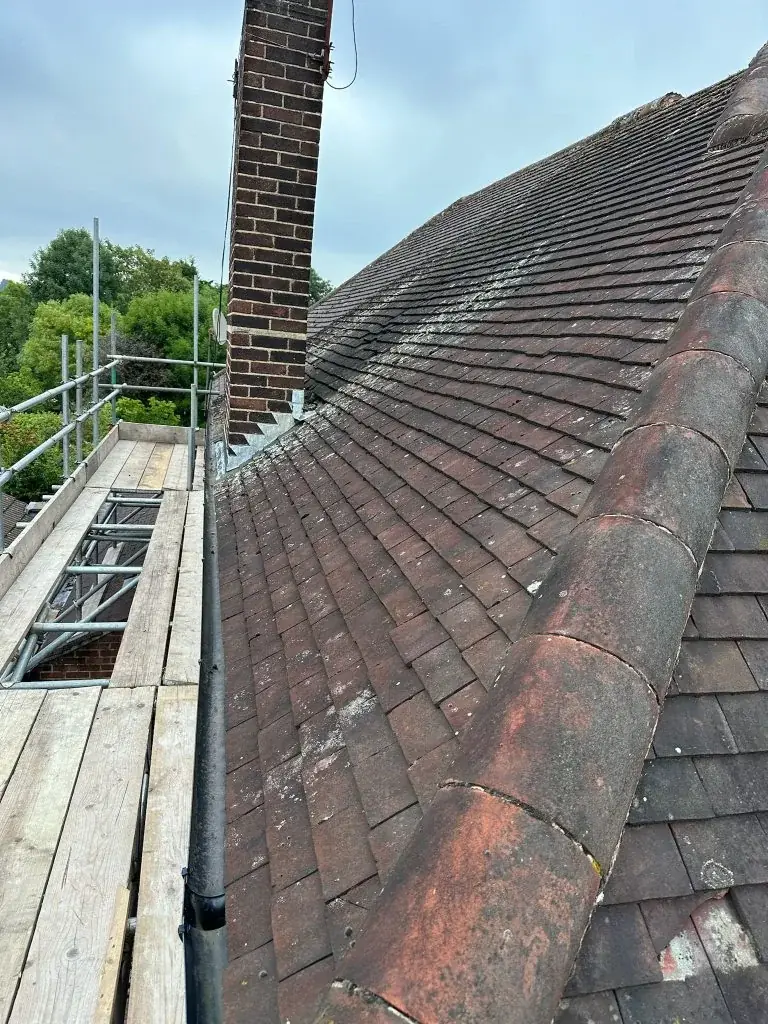
A leak does not always start directly above where water appears inside. Roof coverings, ridges, flashing, abutments and drainage all work together, so the scope should be based on an inspection of the accessible defects rather than on guesswork from the internal stain alone.
That matters because the wrong repair can leave the cause untouched. If the visible defect is only part of the problem, fixing one tile or one patch of felt may not solve the water path. A better brief starts with diagnosis and then defines the smallest adequate repair, or a larger scope if that is what the roof needs.
Barbican checks before roofing work is agreed
The City of London has conservation-area information and area documents, including Barbican and Golden Lane materials, which may be relevant to external roof changes. But those facts do not confirm what applies to every address. The exact property, the extent of the repair and any wider planning or consent issues should be checked before a roofing scope is fixed.
Design decisions
Keep repairs, replacement and conversion work distinct
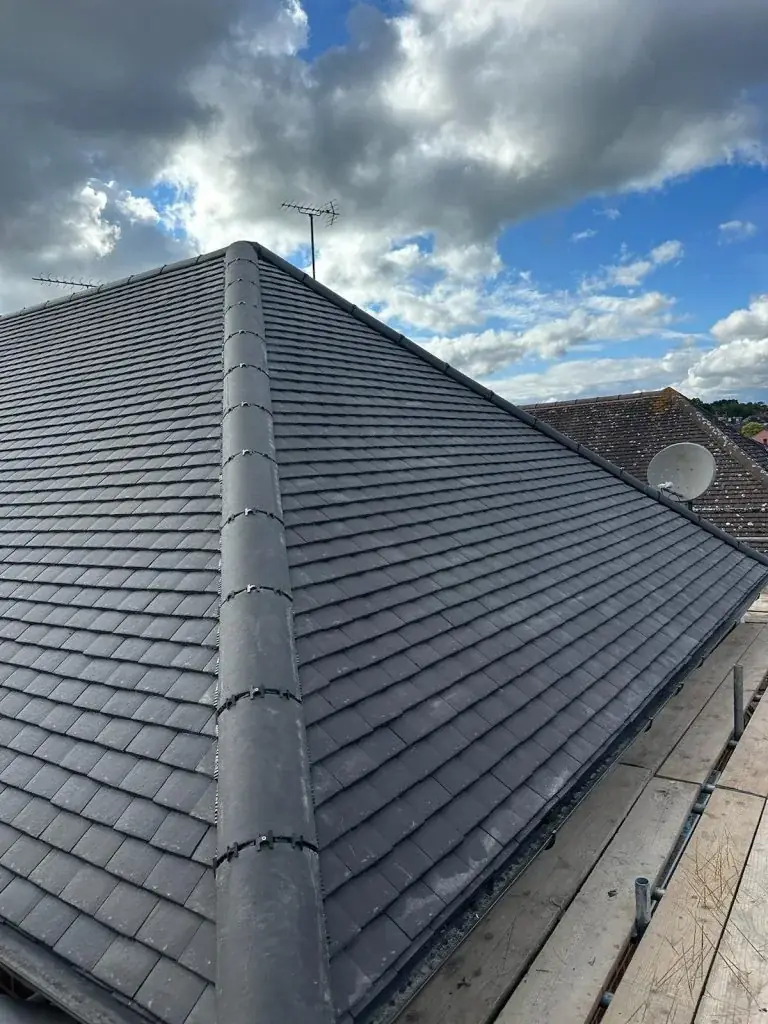
Roofing repair, roof replacement and loft conversion are different scopes. A repair addresses local faults; a replacement changes the covering more broadly; a conversion brings structural and layout issues into the picture as well. Mixing those ideas together can make it hard to know what is actually being proposed.
If the work is linked to a loft conversion, the roof alterations should be coordinated with the structural design and service requirements. For a smaller alternative, a possible brief might stay with accessible repair work only, provided the survey shows the roof is otherwise serviceable. The right path depends on the roof’s real condition, not just the size of the damp patch.
Design checks
Four things we confirm before drawing roofing work.
- 01Inspect accessible roof defects and define the repair scope from findings.
- 02Check flashing, abutments and rainwater junctions as well as the covering.
- 03Keep repair, replacement and conversion work clearly separate.
- 04Coordinate roof changes with any structural or service requirements.
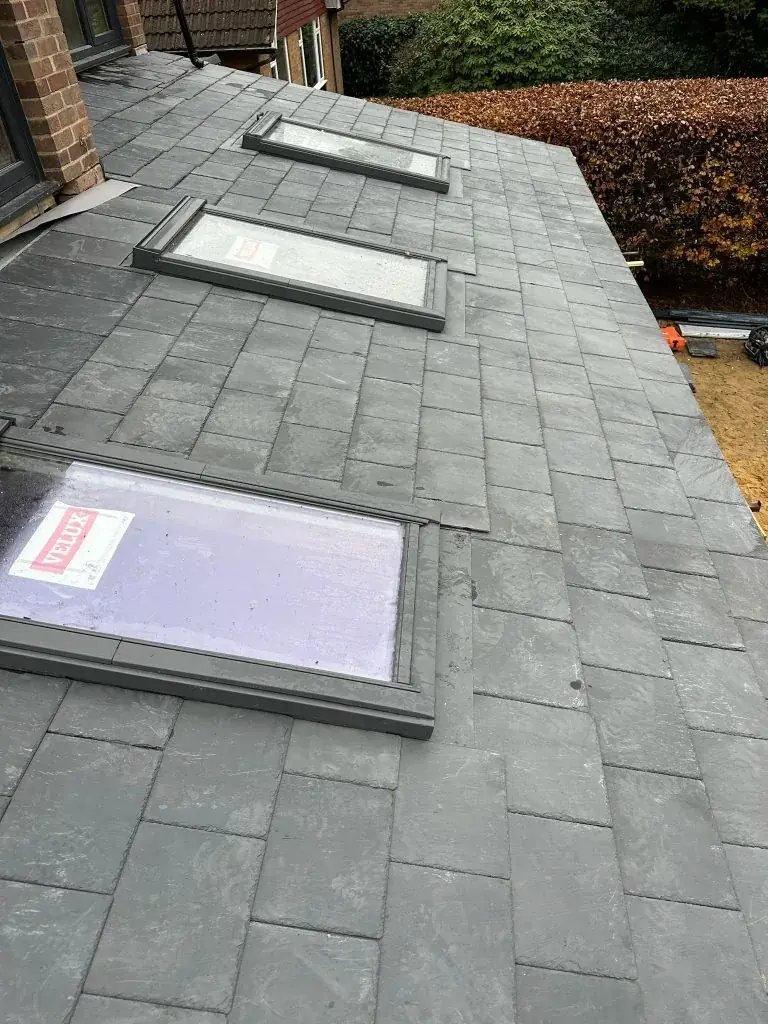
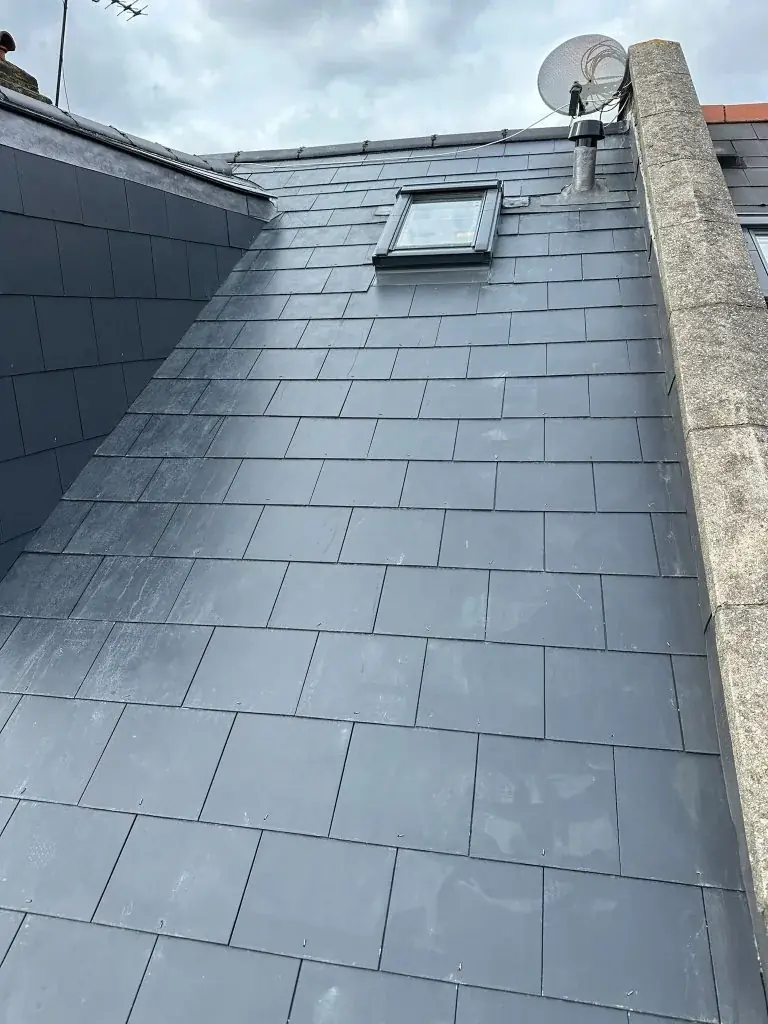
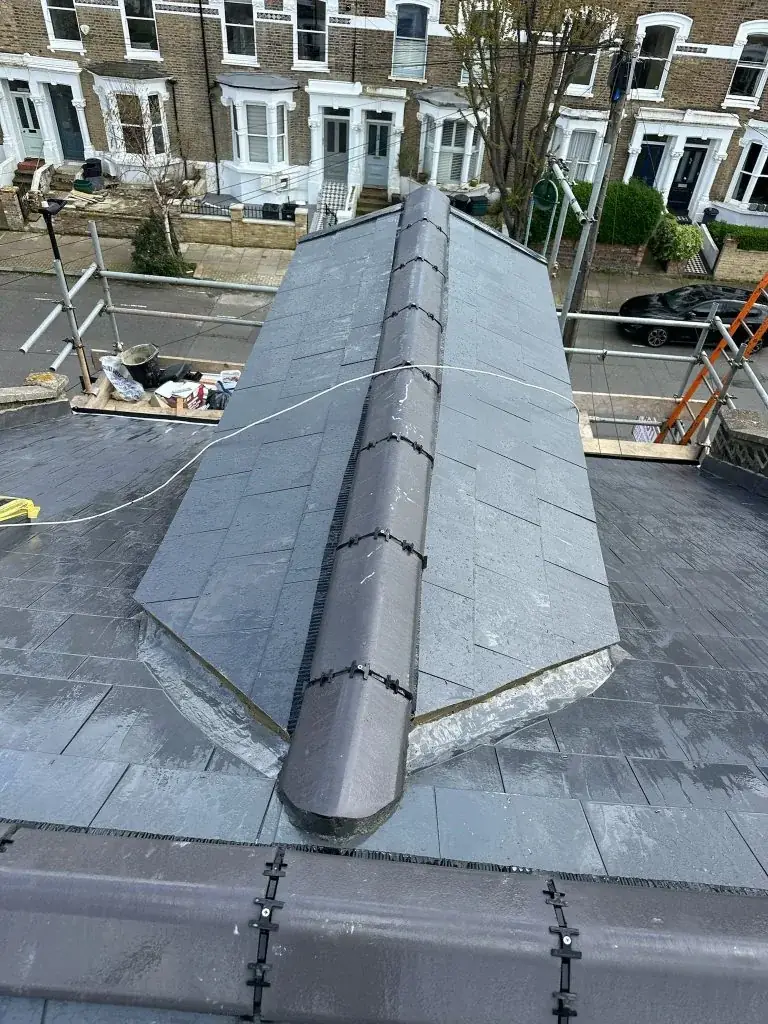
Why should the roof be inspected beyond the obvious leak point?
Because water often travels before it shows inside. The visible stain can be far from the real defect, so a proper inspection needs to consider the covering, junctions and drainage points as well as the area directly above the leak.
When is repair more sensible than replacement?
When the roof is generally serviceable and the defect is localised. If the covering, junctions and underlying condition are broadly sound, a targeted repair may be enough. If not, the scope may need to be wider.
How does roofing connect to a loft conversion?
A loft conversion may require changes to the roof structure, covering and service routes. That is why conversion work should not be treated as a simple repair job; the roof changes need to be coordinated with the wider design and structural plan.
Planning and project guidance
- Conservation areas - City of London
- GOV.UK · Planning permission
- GOV.UK · Building regulations approval
- GOV.UK · Party walls and building work
Check the current guidance for your address before relying on a planning route. This guide is not a planning decision or a verified local case study.
Other services in Barbican








