
Hounslow · West London
Skimmingin Chiswick.
A skim coat is a finishing choice, not a cure for every wall problem. The right decision depends on whether the background is stable, how much preparation is needed and whether the room is being refreshed or brought into a bigger refurbishment.

- Service
- Skimming
- Neighbourhood
- Chiswick
- Borough
- Hounslow
- Next step
- Discuss your project
Your project brief
Use skimming only where the base is suitable
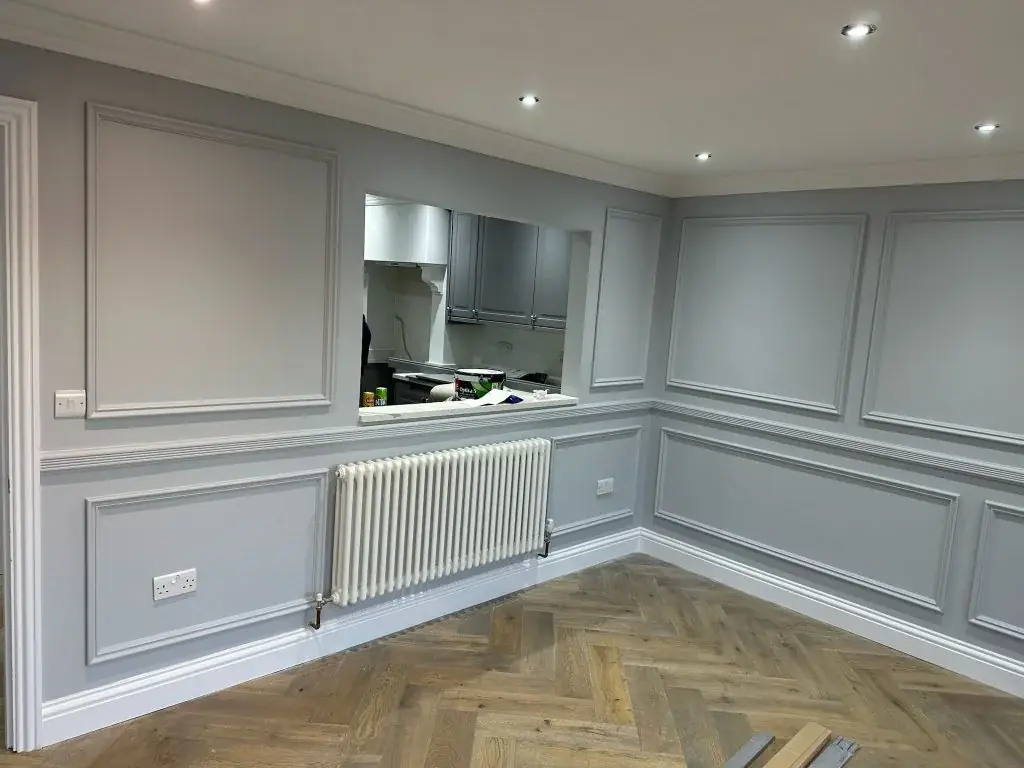
If the existing plaster is sound but looks tired, uneven or marked, skimming can refresh the room without replacing the whole lining. That makes sense when the surface is firm enough to carry a thin finish and the aim is a smoother result before decoration.
Where new plasterboard has been installed, skimming can provide the final face after the board joints and fixings have been prepared. The quality of the board installation matters because a skim will show up movement, poor fixing or badly set junctions.
Local caution for skim work in Chiswick
Skimming inside a Chiswick home is usually a background-preparation decision, but any associated exterior alteration or listed-building issue must be checked separately through the relevant Hounslow Council route. The council’s conservation-area guidance shows that some exterior changes to single residential dwellings can need planning permission, and Article 4(2) Directions may further limit exterior works. Exact address checks matter before the wider project is treated as straightforward.
Design decisions
Make the edges and defects part of the decision
Small dents and blemishes may be acceptable for local filling, but broader surface issues call for a clearer plan. If the wall has cracks, loose patches or poor edges around windows and doors, those need identifying before anyone assumes a skim alone will be enough.
The finish should also be coordinated with the decoration stage. Skimming is one part of a sequence: once it is done, there still needs to be drying time, preparation and the right coating system, otherwise the visual result will not match the effort put into the base layer.
Design checks
Four things we confirm before drawing a skim finish.
- 01Finishing suitable plasterboard surfaces after new partitions or ceiling work.
- 02Re-skimming sound existing plaster where a smoother finish is wanted.
- 03Making good minor surface defects, with more substantial repairs identified separately.
- 04Preparing edges and junctions around windows, doors and adjoining finishes.



When is skimming a sensible choice instead of full plaster replacement?
When the base surface is stable and only the finish needs improving. If the wall is largely sound, skimming can provide a cleaner surface without the disruption of stripping everything back, but it should not be used to disguise serious movement or failure.
Does skimming change the decorating plan?
Yes, because a skim needs drying and proper preparation before paint or wallpaper goes on. It is best to plan the finishing order in advance so the decoration stage does not start too early or get disrupted by follow-on repairs.
What should be checked around openings before skimming?
The condition of the edges, corners and junctions should be checked, especially around windows, doors and any new boards. Those areas often reveal whether the surface is truly ready or whether further making good is needed first.
Planning and project guidance
- Conservation areas FAQ | Design and conservation | London Borough of Hounslow
- GOV.UK · Planning permission
- GOV.UK · Building regulations approval
- GOV.UK · Party walls and building work
Check the current guidance for your address before relying on a planning route. This guide is not a planning decision or a verified local case study.
Other services in Chiswick








