
Kensington and Chelsea · Central London
Decoratingin Chelsea.
Decorating is where the room starts to feel finished, but it only works if the earlier stages are complete. Wallpaper, colour, trim and junctions all depend on good sequencing. The main choice is how to combine the finishes so they sit neatly with the room’s actual condition and use.

- Service
- Decorating
- Neighbourhood
- Chelsea
- Borough
- Kensington and Chelsea
- Next step
- Discuss your project
Your project brief
Plan the order of finishes carefully
Decorating should usually come after disruptive building work, not alongside it. If repairs, joinery or services work are still unfinished, the finish can be damaged or patched again. The scope should therefore set the sequence clearly so everyone knows when decorating is supposed to begin.
Surface condition matters as much as design. Wallpaper needs a suitable background, paint needs the right preparation and trim details need alignment. A survey helps show whether the room is ready for decoration or whether further repair work is required first.
Chelsea checks before final decorative work
For Chelsea homes, any local planning sensitivity should be checked by exact address if the decorating is part of a wider alteration that affects external appearance or designated parts of the building. Kensington and Chelsea’s conservation-area information is relevant to external change, but it does not replace a site-specific check. Inside the home, the main issues remain preparation, sequencing and the condition of the surfaces to be decorated.
Design decisions
Be specific about detail, not just colour
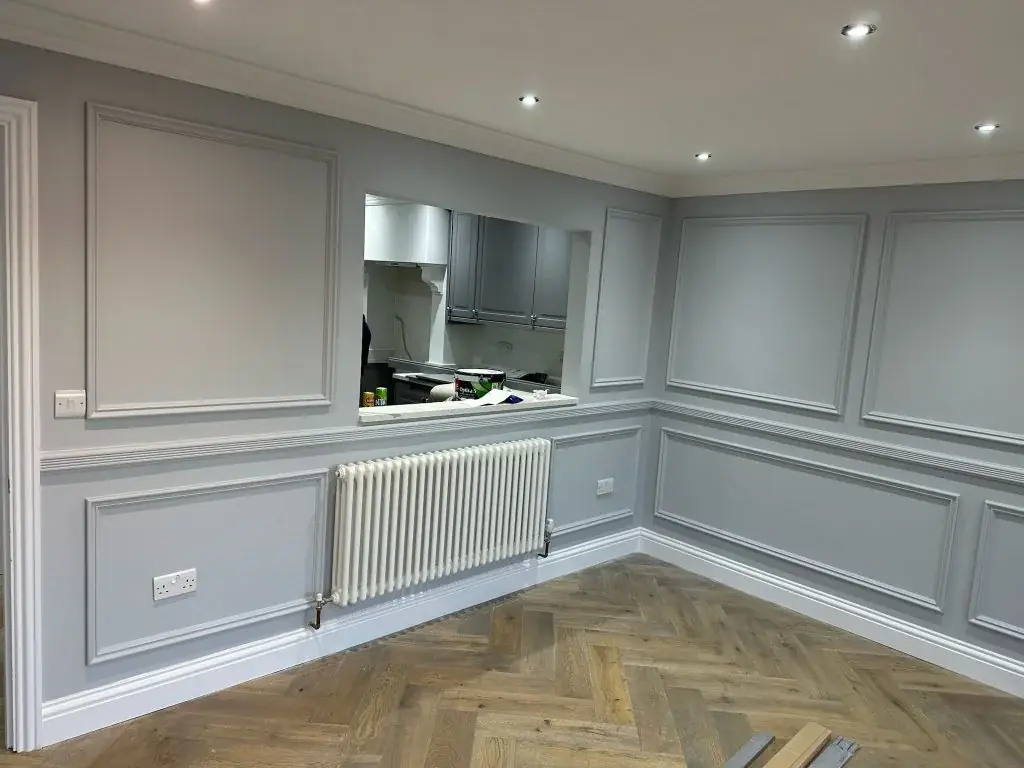
A decorating brief should distinguish between wallcoverings, feature areas, timber finishes and the final detailing around frames and skirting. That avoids assumptions about what is included and how the room edges should be handled, especially where different materials meet.
If a possible brief includes a feature wall, for example, the scope should say whether the surrounding rooms are being finished to match, whether trim is being repainted and how the final junctions are to be treated. That level of clarity prevents small gaps in the finish from becoming disputes later.
Design checks
Four things we confirm before drawing decorating work.
- 01Confirm the room is ready and all disruptive work is finished.
- 02Specify wallpaper, paint and trim finishes separately.
- 03Check the quality of the background before choosing wallcoverings.
- 04Set out junctions, feature areas and final detailing in writing.




How do I know whether a room is ready for decorating?
It should be dry, stable and free from unfinished repairs. If there are still open chases, sanding dust or fresh making-good, the decoration stage is likely too early.
Why are trim details worth spelling out?
Because the edges and junctions are where a finish often looks either careful or rushed. Naming them in the scope helps avoid disagreements about who is handling the final neatness of the room.
Can decorating be part of a larger refurbishment package?
Yes, but the stage order should still be clear. Decorating is usually the finishing phase, so the scope should explain what must happen first and what surfaces are included at the end.
Planning and project guidance
- Conservation areas | Royal Borough of Kensington and Chelsea
- GOV.UK · Planning permission
- GOV.UK · Building regulations approval
- GOV.UK · Party walls and building work
Check the current guidance for your address before relying on a planning route. This guide is not a planning decision or a verified local case study.
Other services in Chelsea








