
Kensington and Chelsea · Central London
Doorsin Notting Hill.
A door is only successful if it fits the opening, works with the adjoining finishes and serves the room properly. That means door work is partly carpentry and partly problem-solving: the frame, clearances and hardware all matter as much as the leaf itself.
- Service
- Doors
- Neighbourhood
- Notting Hill
- Borough
- Kensington and Chelsea
- Next step
- Discuss your project
Your project brief
Decide whether the existing frame can stay
Before ordering a replacement, it is worth checking whether the frame or lining is sound enough to keep. Reusing what is already there can be sensible if the opening is true and the surrounding joinery is in good condition. If not, the wider opening may need adjustment.
That decision affects more than the door itself. Architraves, making-good around the opening and the final finish all depend on whether the existing frame is retained. A straightforward replacement can quickly become a larger joinery job if the opening is out of line or the clearance is poor.
Local checks for door work in Kensington and Chelsea
Kensington and Chelsea’s planning and conservation-area pages matter if the door project changes the external appearance of a property or forms part of a wider alteration. The borough says to check the exact property, because conservation-area status and any removed permitted development rights are site-specific. Internal door replacement is usually a joinery decision, but the wider project may still need a local check.
Design decisions
Match hardware and performance to the room
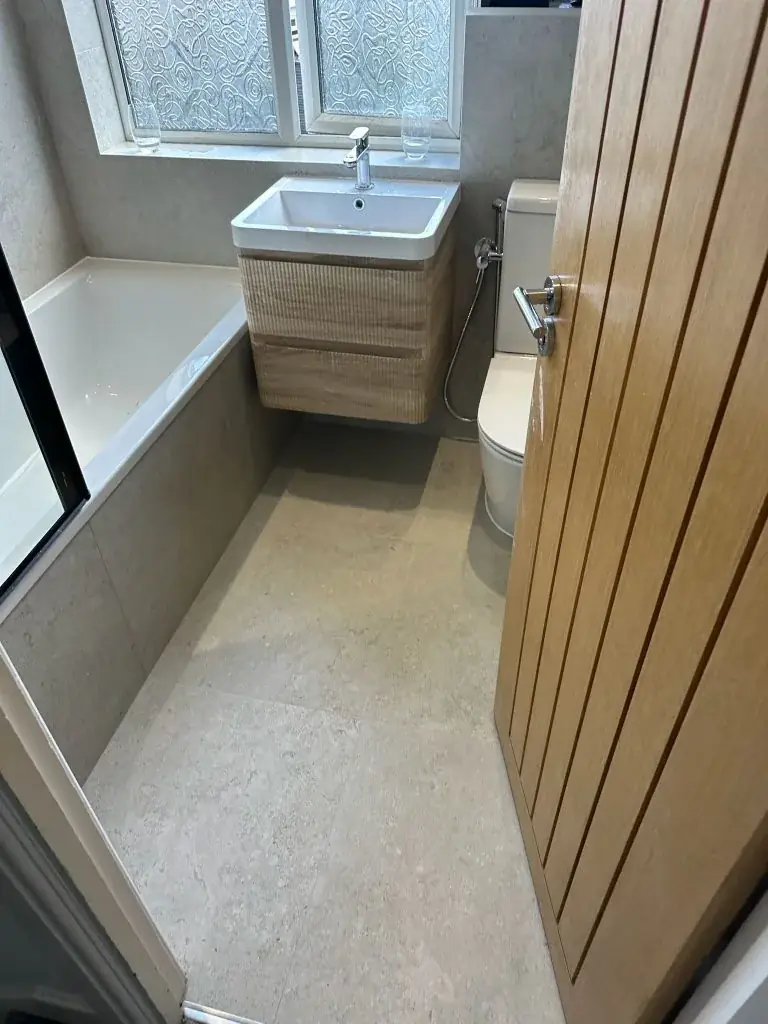
The hardware should reflect how the door will be used. A passage door, a privacy door or a door needing a different level of performance will not all need the same handles, hinges or latches. Thinking about use first helps prevent a mismatch between the door and the room.
If the project involves an external door or an altered opening, the installation requirements are different and should be assessed separately. That is not just a matter of appearance; it is about fit, security and the correct construction for the opening involved.
Design checks
Four things we confirm before drawing door installation.
- 01Check whether the existing frame, lining and opening are sound enough to keep.
- 02Measure clearances and adjoining finishes before ordering the door.
- 03Match hinges, latches and handles to the door’s intended use.
- 04Treat external doors or altered openings as separate installation decisions.

How do I know if a frame should be replaced with the door?
If the frame is warped, damaged or not square enough to support the new door properly, replacement may be needed. If it is sound and the opening works, retaining it can be a practical option.
Why does door hardware matter so much?
Because hardware affects how the door feels and functions every day. The wrong hinges or latch can make a good door awkward to use, even if the measurements are correct.
Is an internal door just a finish item?
Not quite. It is also part of how the room works: privacy, sound, circulation and even furniture placement can all be affected by the door and its swing. That is why it should be planned, not left to the end.
Planning and project guidance
- Conservation areas | Royal Borough of Kensington and Chelsea
- GOV.UK · Planning permission
- GOV.UK · Building regulations approval
- GOV.UK · Party walls and building work
Check the current guidance for your address before relying on a planning route. This guide is not a planning decision or a verified local case study.
Other services in Notting Hill








